Parabiosis
Historical document, translated for reference. It reflects medical knowledge of the 1920s–30s and is not medical advice.
Summary
Parabiosis refers to the surgical connection of two organisms to study their mutual influences through shared circulatory systems. This experimental method was used to study humoral influences, including hormonal effects and toxin transmission between the connected organisms.
Encyclopedia article (1928–1936)
PARABIOSIS (from the Greek para- beside and bios- life), a term having two meanings. 1. The union of two organisms for the purpose of studying their mutual influences through the mediation of the circulatory and lymphatic systems. Parabiosis experiments were performed on mammals, birds, and amphibians through direct cross-connection of blood vessels
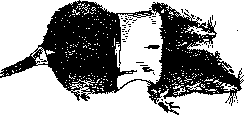
Figure 1. Rats immediately after the parabiosis operation.
by suturing the edges of skin incisions or establishing communication between the peritoneal cavities of the partners (figs. 1 and 2). In the latter case, the skin, muscles, and peritoneum were sutured layer by layer. In birds, parabiosis was performed by suturing the skin of the forearms, which had been plucked (fig. 3). The first acute parabiosis experiment was conducted by Frederick, who studied the effect of blood chemistry on the activity of the respiratory center. In two dogs, the circulatory systems were connected so that blood from the carotid artery of the first dog flowed to the head of the second and vice versa. If the trachea of one of the partners was clamped and thus the carbon dioxide content in the blood was increased, the other dog began to breathe more frequently. This form of acute physiological experiment, in which the connection between individuals is brief, does not make it possible to trace the influence of one individual on another in cases where indicators of the response do not react as quickly to humoral stimulation as the respiratory center in Frederick's experiments. For purposes of long-term observation, the joining of "29 partners by one of the above-mentioned methods was used. With all methods of parabiosis, the resulting connection of the blood vessels of the partners, whether through the fusion of capillaries or the connection of lymphatic vessels, often led to undesirable results for the experimenter. Many laboratory animals react to being joined by the death of one of the partners. The most sensitive in this respect are guinea pigs, the least sensitive are white rats. Experiments on rats are the most complete. The possibility of establishing a connection between the circulatory systems of animals joined for parabiosis is demonstrated both by direct macro- and microscopic examination of the point of union and by the fact that certain substances pass from the blood of one partner into the blood of the other. Thus, in 1909, Ranzi and Ehrlich, Friedberger and Nasetti showed that during immunization of ONE OF THE partners with bacterial toxins, the corresponding antitoxins could be detected in the other. Similar facts regarding the passage of antitoxins against cancer through the bloodstream were established by Rous and later against rat sarcoma by Matsuyama. Zappelioni (1910) tested the effect of tetanotoxin on parabiotic rats. In one series of experiments, tetanotoxin was injected into the muscles of a limb, in another - under the skin of the abdomen of one of the partners. In all cases, regardless of dosage, which ranged from maximum to minimum in a ratio of 10:1, the partner not directly exposed developed tetanus 2-3 days later and correspondingly died later. Morpurgo, studying the effect of kidney removal in one partner on the development of uremia in the other, established that the latter did not occur in all cases, i.e., for the most part, the kidneys of the unoperated partner were able to perform the function of serving both organisms. The presence of a common circulatory system led in a number of cases to circulatory disturbances, with one partner being in better conditions of blood supply than the other. Sauerbruch and Heide were the first to point out these relationships (Sauerbruch, Heide, 1908). In the experiments of these authors, such parasitism of one partner on the other was particularly noticeable when the paired rabbits were of different sexes, obviously due to the different power of the heart in the female and male. Morpurgo in his experiments on rats basically confirms the conclusions of Sauerbruch and Heide. The pumping of blood from one individual to another in parabiosis is particularly clearly shown in the experiments of M. Zavadovsky. In his work on parabiosis in roosters, in a number of joined pairs, a distinct pumping of blood from one rooster to the other occurred. This was associated with a significant increase in the size of the organs of the "full-blooded" and "bloodless" rooster. The latter died within 8-15 days (fig. 4). The parabiosis method was used by a number of authors to study hormonal influences and, in particular, to clarify the effect of sex hormones on the development of sexual characteristics. Pioneers in this field were Sauerbruch and Heide, but they failed to obtain clear results. In Morpurgo's experiments, 6 pairs of parabiotic rats of different sexes lived for more than 3 months. During this time, no noticeable changes in sexual characteristics could be noted. The testes and penis of parabiotic males were no smaller than those of the controls. The nipples of parabiotic females remained as well developed as those of the controls. Matsuyama (1921), who conducted parabiosis experiments on white rats, connected the skin, muscles, and peritoneum layer by layer, creating communication between the peritoneal cavities. The results of Matsuyama's work regarding changes in the sexual sphere of parabiotic rats are as follows. The gonads of opposite-sex pairs undergo degeneration. Degeneration of the testes occurs particularly early. Degeneration of the ovaries begins somewhat later and is expressed in their cystic transformation.
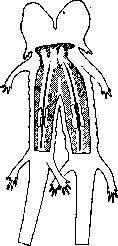
Figure 2. United Amblystoma larvae. On the
opened areas, the ovaries of both partners are visible. (From Björn.)
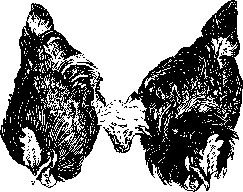
Figure 3. Roosters sutured along the forearm (according to Zavadovsky).
Figure 4. On the left - heart, spleen and liver of the "full-blooded" rooster, on the right - the "bloodless" rooster. In the result
of this, the organs of the "bloodless" rooster atrophied.
' as a result of this, the female in P. with the male becomes incapable of conception. Indeed, in one case fertilization of such a female occurred, but the pregnancy was interrupted before term, and defects in placenta formation were discovered. Autopsy revealed deep cystic degeneration of the ovaries. The male, joined with the pregnant female, showed extreme degeneration of the testes. One can therefore think that the humoral influences emanating from the body of the pregnant female have an even more depressing effect on the male sex gland than on the non-pregnant one. Very interesting materials were obtained by Matsuyama as a result of experiments on P. of normal and castrated animals. When a female was joined with a castrate, she remained infertile, and the ovaries showed a picture of cystic degeneration. The male, joined with a castrate, experienced degeneration of the testes. N. Goto (K. Goto, 1925) performed very extensive work on P. in rats. Of the 206 pairs he joined, 78, i.e. 38%, lived for more than a month; one pair lived for 2 years 4 months. The sex of the animals did not have a significant effect on survival. Thus, heterosexual pairs survived in 39% of cases, while homosexual pairs in 37%. Animals from the same litter gave somewhat better results (41% survived) than from different parents (37% survived). The operation is more successful on immature rats than on adults. Communication between the blood vessels begins on the 5th day of P. The study of P. of normal animals with castrates leads Goto to conclusions that differ substantially from those of Matsuyama. P. of a normal or semi-castrated female with a castrate leads to sharp changes in her sex organs. These changes consist in hypertrophy of the ovaries, proliferation of follicles, sometimes in the formation of cysts and a large number of yellow bodies. The changes occurring in the uterus, the author considers secondary and dependent on disorders in the ovaries. They reduce to hypertrophy of the mucous membrane, sometimes hydrometra or pyometra occur. In P. of a normal male with a castrate, hypertrophy of the seminal vesicles and prostate is noted in the first. Histological examination of the testes gave no indications of any deviations from normal. Based on the data presented, Goto asserts that in the blood of castrated rats there is a special substance, named by him 'castrahormone'. This 'castrahormone' directly or indirectly causes irritation of the ovaries and their hypertrophy. By joining a normal female with a normal or castrated male, Goto, in agreement with the data of Matsuyama, found atrophy and degeneration of the sex glands in both partners: namely, cessation of spermatogenesis, resp. oogenesis. A special study of changes in the active mesenchyme associated with the parabiotic state was undertaken by Sauerbruch (1923). He established that with prolonged P., the multiplication of lymphoid elements increases, and particularly clear changes are noted in the liver reticulo-endothelial elements. The author interprets these changes as a result of mutual influences of the organisms joined in P., in particular as a reaction to the constant introduction of foreign proteins and metabolic products into the bloodstream. This exchange of blood may have a non-specific depressing effect on the activity of the sex glands, which was noted in the interaction of individuals of different sexes and in P. of normal animals of both sexes with castrates. In experiments with P. of mammals, it was not possible to establish a specific influence of sex hormones on the development of sexual characteristics in a partner of the opposite sex or in a castrate partner. Such a change in sexual characteristics, particularly of the sex glands themselves, was observed under conditions that could be called natural P., namely in the so-called free-martin of heifers (see Hermaphroditism, - hermaphroditism in animals). An attempt to understand these phenomena is represented by experiments conducted on amphibians, in which fusions are easily performed on embryonic and larval stages. Already Harms (Harms, 1911) showed that in P. in amphibians, the sex hormone passes from one partner to another and affects its sexual characteristics. A castrated male in P. with a normal one retained his morphological secondary sexual characteristics (nuptial pads) and mating instinct. Burns (1925) conducted experiments on P. in embryos of amblystoma (Amblystoma punctatum). The operation was performed at the stage immediately following the closure of the medullary groove. Of the operated animals, 80 pairs survived, and all pairs turned out to be of the same sex (44 pairs of males and 36 pairs of females). The sex of the embryos being joined could not be determined in advance, so the distribution of sexes in such experiments should follow the law of chance. In other words, one would expect such a ratio: 1♂♂: 1♂♀: 1♀♂: 1♀♀, i.e. there should be as many heterosexual pairs as homosexual ones. The discrepancy between the experimental results and the theoretical calculation can be interpreted either as a consequence of selective mortality of heterosexual pairs or as a consequence of the transformation of one sex into another. Burns stops at the second explanation, believing that as a result of P. of heterosexual individuals, half of the females turned into males and half of the males into females. Since histological observations of Burns gave no indications of the phenomenon of transformation of the sex glands, his conclusions remained unconvincing. Very clear results in similar experiments were obtained by Witschi (Witschi, 1927), who studied the results of P. in the American tree frog (Hyla silvatica). He performed pairwise fusion of embryos at the stage following the closure of the medullary groove, i.e. 50-70 hours after the start of development at room temperature. The distribution of sexes in control animals was normal: 100♂ to 96♀; theoretically, 98♂ to 96♀ was expected (probable error ±4.7). Among the 56 surviving parabiotic twins, one could expect such a distribution of sexes: 14♂♂: 14♂♀: 14♀♂: 14♀♀ (probable error ±2.2). Microscopic examination of all 56 pairs gave results very close to expected: 16♂♂:17♂♀:10♀♂:13♀♀. However, microscopic examination of the gonads showed that of the 17 pairs where the left was male and the right female, 7 females showed a clear tendency to transform into males. The same picture was given by 4 females out of 10 pairs where the left was female and the right male. In no case was such a transformation of the male sex toward the female observed. Witschi believes that his results satisfactorily explain the phenomenon of free-martin, where also the transformation of sex goes only from ♀ to ♂, if one assumes that the male sex hormone in mammals and amphibians dominates over the female one. It is necessary, however, to note that in amphibians the transformation of one sex into another is accomplished with great ease under the influence of various influences. In mammals, the relationships are more complex, and such an extrapolation can hardly be accepted unconditionally.
Before him, all phenomena of inhibition were viewed as a process sui generis, either caused by the action of special inhibitory nerves, inhibitory stimuli, or, although conditioned by the process of excitation, as being its direct opposite (Hering, Gaskell). Already in his early studies, Vvedensky was able to prove that one and the same muscle can produce directly opposite effects depending, firstly, on its state, and secondly, on the strength or frequency of the stimuli falling upon it. It is always possible to find conditions under which the strengthening or increasing the frequency of electrical stimuli applied to the nerve of a neuromuscular preparation will produce not an increase, but a weakening of the muscle contraction. The external weakening of the excitation process appears in this phenomenon of pessimum (see) as a result of the strengthening (or increasing the frequency) of the stimulus. Under these conditions, there can be no talk of the intervention of special inhibitory fibers, since, by stimulating the nerve trunk at two points, one can prove that the simultaneous application of both stimuli will produce phenomena of depression, while each of them individually will cause a maximal contractile effect. Further analysis of this phenomenon showed that depression develops at lower strengths and frequencies of stimulation, the smaller the number of excitation waves the tissue is capable of reproducing without transforming the rhythm of the stimuli falling upon it. A nerve fiber can produce up to 500, a muscle up to 200, and the end plate of a motor nerve 100-120 individual excitation waves per 1 sec. These facts were established by the registration of electrical effects accompanying each excitation wave. The maximum number of individual bouts of excitation that arises in a tissue upon the application of rhythmic stimuli to it without transformation of the rhythm of the latter was named by Vvedensky functional lability. This value is determined by the duration of the aftereffect left in the tissue by each excitation wave; if the next impulse falls into the refractory phase from the previous one, it does not produce an excitatory effect, and the number of excitations produced by the tissue lags behind the number of stimuli applied to it; if, however, the next impulse falls on the tissue during the period of the exaltation phase, which succeeds the refractory one, then the effect of the second excitation will be greater than the effect of the first, and before us will be a picture externally opposite to the pessimum — summation, exaltation of excitations. Having established that the key to understanding the phenomena of summation of excitations and their mutual depression should be sought in the mechanism of the refractory phase, Vvedensky in 1901-1903 went significantly further, assuming that all phenomena of inhibition have at their basis the same summation of excitation as the phenomena of exaltation. Qualitatively different effects of vital activity are reduced here to altered quantitative dependencies, and not to the appearance of a new, ad hoc invented mechanism. The justification for this point of view was given in studies of the reaction of the nerve fiber to the most diverse physical and chemical agents. Vvedensky proved that the most heterogeneous influences cause fundamentally homogeneous changes in the nerve; at the beginning of the action of all agents on the nerve fiber, we observe a phase of increased excitability. Subsequently, the treated section of the nerve shows characteristic changes in relation to the conduction of excitation waves. At first, the difference in effects from strong and weak stimuli applied above the changing section begins to smooth out (provisory phase). Then, weak stimuli applied above the changing section begin to produce a greater effect in the muscle than stronger stimuli (paradoxical phase, see). The matter ends with the changed section completely losing the ability to conduct excitations. If the agent acting on the nerve is not removed, then the non-conductivity becomes irreversible (death of the nerve); otherwise, the nerve returns to its normal properties, with all the above-described phases being observed in reverse order. The above-described picture does not depend on the nature of the influence on the nerve fiber: it is caused by a typical stimulus — a strong electric current, and by typical narcotics — morphine, chloral hydrate, and "excitatory" K ions, and "inhibitory" Ca ions, and cooling of the nerve and its heating, and hydroxyl and hydrogen ions, and typical oxidizers (KMnO4), and depriving the nerve of access to oxygen, etc., etc. Hence Vvedensky's thought: all agents act as stimuli, primarily always causing a process of excitation. Specifically inhibitory agents, causing a process of inhibition "from the start," do not exist from this point of view. Should one, having recognized the primary reaction of the nerve as excitation, accept the subsequent onset of a reaction of the opposite sign, the appearance of a specific process opposite to excitation? Vvedensky rejected this dualism, having proved that the changes developing in the changed section of the nerve are summed with the changes from an additional electrical stimulus applied to it. While weak stimuli still pass through the changed section of the nerve, additional stimulation of this section inhibits this effect. At the same time, as well as after the development of complete non-conductivity, stimulation applied to the changed section continues to influence it, because during the application of this stimulus, the already increased excitability on both sides of the inhibition section increases sharply. At the same time, stimulation of the section in which depression is developing accelerates the development of non-conductivity. It can be said that the development of depression is summed with the result of ordinary stimulation. On the basis of these facts, Vvedensky came to the conclusion that the non-conductivity of the nerve, the depression of its vital activity, has behind it an extreme deepening of the process of excitation. The section of inhibition is a section of intrinsic excitation that has lost its usual oscillatory character. From this point of view, the summation of intrinsic excitation with the effect of additional stimulation is understandable, the increased excitability at the periphery of the focus of over-excitation is understandable, the persistent electronegativity of the changed section in relation to neighboring points is understandable (electronegativity has been considered a characteristic sign of excitation since the time of du Bois-Reymond). That degree of excitation at which the excitatory process does not spread in a wave-like manner, but is confined to the place of its development, and the tissue covered by it shows all the features of depression, received from Vvedensky the name Parabiosis. At the same time, Parabiosis can occur both as a result of excessive strengthening of the usual process of excitation and upon any artificial influence on the tissue. In principle, any influence can act as a stimulus, and it, upon the deepening of its action, can cause phenomena of depression. Narcosis, poisoning, and asphyxiation appear here as a special case of the reaction of excitation. Hence the generalizing explanation of the processes of excitation, inhibition, and narcosis. It would be a gross oversimplification to understand Parabiosis as a state that always develops unambiguously only depending on the strength of the stimulus. The conditions for the development of Parabiosis are determined by the state of the tissue, and a known indicator of this state is the magnitude of functional lability, which determines the conditions for the development of depression. It is understandable that the higher this lability, the less persistent the aftereffects from each individual bout of excitation, the worse the conditions for the summation of excitation. Applying the theory of Parabiosis to the interpretation of the phenomenon of the refractory phase, we must admit that depression is created as a result of the summation of excitations. The second stimulus, which has fallen into the refractory phase, encounters, from this point of view, not a state of non-excitability, but a state of extremely increased excitability, which it raises even further. At the same time, depending on the state of the tissue and the strength of the stimuli, we can have either a culmination of excitation beyond its usual oscillatory character or a picture of a stagnant wave of excitation. If, however, each subsequent stimulus encounters a lesser degree of increased excitability (exaltation phase), i.e., acts later (or is itself weaker), then we will have conditions for exaltation. Each tissue and each of its states corresponds to its own limit, beyond which the strengthening of excitation manifests itself as a picture of depression. The magnitude of lability is not a given magnitude; it is a dynamic magnitude, depending both on everything that preceded and on the current state of the tissue. At the same time, each degree of excitation likely corresponds to a different degree of lability. In Ukhtomsky's laboratory (Rusinov), it was proven that in certain stages of the development of Parabiosis, an excitation wave, penetrating into the parabiotic section, increases the falling lability; with further development of Parabiosis, on the contrary, it accelerates the fall of lability. Lability itself is simultaneously both an indicator of the dynamic state and a factor determining the course of excitation processes. Such, in schematic features, is Vvedensky's theory. At its basis lies the rejection of understanding the reaction of excitable tissues as a process that is always constant and predetermined, a monistic approach to the most complex problems of physiology.
The theory of Parabiosis teaches that various qualitative features of vital activity should be interpreted not from biased schemes about the intervention of specific processes, but from an assessment of the state of the reacting substrate and the intensity of the agent acting upon it. It teaches that depending on the changed state of the reacting object, we can have directly opposite reactions. It places at the forefront the continuous variability and mobility of all vital phenomena. The theory of Parabiosis indicates that the phenomena of depression (inhibition) and excitation are not separated from each other, are not opposite; they are a function of the strength of excitation, which is determined not only by the property of the stimulus, but also by the state of the reacting apparatus. The theory of Parabiosis received its motivation and justification on an isolated neuromuscular preparation. Vvedensky's successor, Professor A. A. Ukhtomsky, carried out the transfer of the theory of Parabiosis to the interpretation of the activity of nerve centers. This was done in the principle of dominance (see), which teaches that the final result of a central reaction depends not only on the properties of the stimulus, not only on the features of the reflex arc, but also on the intrinsic excitation (resp. state) of the nerve centers. In the presence of a focus of intrinsic excitation in the centers, this latter (the dominant) deflects extraneous stimuli onto itself, since, given its relatively low lability, conditions are provided within it for the summation of excitation. However, this also determines the possibility of the transition of the dominant into inhibition and indicates the conditions (average or low degree of intrinsic excitation, rare and weak extraneous stimuli) under which the dominant center will strengthen its reaction, and the conditions under which excitation in the dominant focus is replaced by its inhibition (strong excitation, frequent and strong extraneous stimuli). Here, again, it is mandatory to take into account the dynamism of all tissue reactions, as a result of which the lability of the centers is a mobile value, determined by fluid working relations and the entire "history of the system." The theory of Parabiosis is here not only a means for explaining phenomena, but also a guiding thread for predicting in which direction the activity of nerve centers will go under given conditions. The theory of Parabiosis broke sharply with the habitual verbal interpretations that called upon metaphysically constant properties of living tissues and the agents acting upon them to explain incomprehensible phenomena. This is probably the main reason why the theory of Parabiosis penetrates only very slowly into the practice of physiological research. Recently, however, the situation has been changing. A number of facts of physical chemistry suggest that in cases of "narcosis" investigated by Vvedensky, there occurs a deepening of the loosening of cell membranes, a lesser degree of which is characteristic of the process of excitation (Hober, Ebbecke). The works of histophysiologists (Peterfi and others) have given reason to think that in the process of ordinary excitation in a nerve, there occurs a convergence of colloidal particles oriented along the course of the excitation wave, and with the deepening of the action of a direct current, upon the action of narcotics, these same colloidal particles precipitate in the form of neurofibrils (Bethe). On muscle, it has been directly proven that the collision of two weak waves of excitation entails an intensification of the total effect, while the collision of two strong ones entails depression (Fischer). It has also been proven by him that irritation of a curarized muscle, without being accompanied by any mechanical effect, causes an increase in heat production. The difficulties associated with the idea of Parabiosis as excitation that has lost its oscillatory character disappear when compared with cases of Dauererregung (prolonged excitation), where the excited center influences the periphery without causing phase changes in it. Cases of stationary excitation are acquiring ever greater importance in both physiology and neuropathology. At the same time, the introduction into physiology of the method of determining chronaxie makes possible a significantly more rigorous study of functional lability. Thanks to this method, it has been made probable that the anode of a direct current lowers the chronaxie of tissue, i.e., increases its lability, and it has been proven by Vinogradov that the anode (in the usual understanding, reducing excitability) "removes" the phenomena of Parabiosis. Thereby it is proven that Parabiosis is connected with a drop in lability to zero, and an increase in lability can eliminate parabiotic depression. On the other hand, the objections made to the theory of Parabiosis are increasingly falling away. The significance of the "all-or-nothing" "law," which is incompatible with the theory of Parabiosis if one admits that the magnitude of excitation is always a predetermined and constant value, is sharply narrowing. The idea of inhibition as a result of exhaustion has been refuted. Pharmacology is becoming acquainted with ever new cases of the excitatory action of typical narcotics. The theory of Parabiosis (in Western literature, sometimes spontaneously and without mention) is beginning to penetrate into many physiological concepts. The theory of Parabiosis is not a scheme. It should in no case force one to interpret as Parabiosis all cases grouped under the term "inhibition." In particular, in relation to inhibition in the cerebral cortex, it is best at present to still join Academician I. P. Pavlov, who refused to express himself in favor of one or another theory of inhibition, believing that some cases of inhibition are more easily explained from the point of view of one theory, and others from the point of view of another. In individual cases, however, the theory of Parabiosis can serve as a guiding thread in the interpretation of higher nervous activity (e.g., cases of inhibition from "super-strong stimuli," shock; disinhibition as an increase in lability under the influence of excitation that has penetrated into the area of inhibition). It is quite possible that not all cases grouped by us under the name of inhibition can be explained as Parabiosis (e.g., the action of the n. vagi on the heart), but it is undoubtedly true that without the theory of Parabiosis, a number of forms of inhibition cannot be explained. It is understandable that the theory of Parabiosis also does not acquire fixed forms, but expands and changes with the growth of our knowledge. In conclusion, it is necessary to emphasize that the theory of Parabiosis must undoubtedly receive its deepening and assimilation on the basis of dialectical materialism. A number of points in the theory of Parabiosis (the mandatory consideration of the dynamism of the entire state of the tissue, the idea of qualitative differences as the result of quantitative changes, the possibility of a jump-like transition from one state to another, the internal unity of the opposite concepts of excitation and inhibition) force one to see in its justification a manifestation of spontaneous dialectics, the conscious use of which will raise our theoretical ideas about the course of nervous activity to an even higher level.
Related articles
Mentioned in
Cite this page
“Parabiosis.” Soviet Medical Encyclopedia. English translation of Bolshaya Meditsinskaya Entsiklopediya, 1st ed. (Moscow, 1928–1936), ed. N. A. Semashko. https://sovietmedicalencyclopedia.com/article/parabiosis/