Redressment and Reduction Division
Historical document, translated for reference. It reflects medical knowledge of the 1920s–30s and is not medical advice.
Summary
This article defines redressment as a surgical method for correcting body deformities through forced manipulation and discusses its indications, techniques, and complications. It also defines reduction division as the cellular process in developing sex cells that halves the chromosome count.
Encyclopedia article (1928–1936)
REDRESSMENT (from French redressement - straightening), an operation of forceful correction of the shape of a body part by means of systematic overcoming of the elastic properties of the tissues constituting this body part using the method of traction or pressure. Close to R. is the method of brisement forcé, which differs from R. by rougher techniques, in which tissues are not only stretched, but
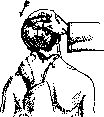
Figure 1. Redressment technique for a typical form of torticollis.
and torn. Elements of both mentioned methods we find already in Hippocrates in his descriptions of surgical manipulations in the treatment of dislocations and fractures. Skillfully applied redressment techniques
by the Arabs (in the 9th–11th centuries), but R. receives its terminological designation and high technical perfection only from the end of the 19th century, when methods of closed reduction of congenital dislocations of the hip joint, methods
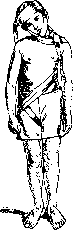
Figure 2. Bandage for torticollis.
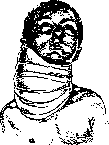
Figure 3. Plaster cast for torticollis.
of correcting clubfoot, contractures, and other joint deformities began to be widely and fruitfully developed. The widely used initially brisement forcé (König, Chipault, Calot) is increasingly giving way to the gentle and delicate technique of R. (Julius Wolff, Adolf Lorenz). Indications for R. are cicatricial ankylosis, traumatic, cicatricial and paraly-
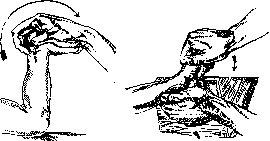
Figure 4. Manual redressment of equinus foot.
Figure 5. Manual redressment of the foot.
tic contractures, infectious contractures in the stage of subsidence of the main process, malunion of bones in the stage of primary callus, various forms of clubfoot, and sometimes also rachitic curvatures of the skeleton. R. is contraindicated in persons with status thymico-lymphaticus, in poliomyelitis patients and rheumatics with long-standing contractures of large joints, especially the hip
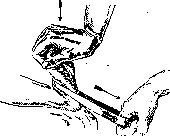
Figure 6. Redressment according to Lorenz.
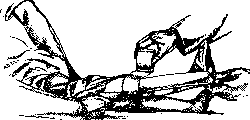
Figure 7. Redressment by bandaging according to Fink.
joint. The operation requires great caution in persons during the period of puberty. In R., one takes into account both the degree of deformity and, in particular,
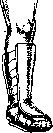
Figure 8. Felt splint according to König.
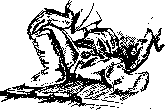
Figure 9. Application of a plaster cast for redressment in children.
the elastic, resp. elastic properties of tissues. These properties fluctuate within very wide limits
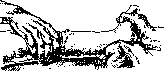
Figure 10. Redressment with application of a plaster cast.
depending on the type of tissue (skin, fascia, tendon, muscle, ligament, bone), its normal or pathological state (cicatricial degeneration, nutritional shrinkage, osteoporosis, etc.), the age of the patient, and partly his sex. The elasticity of living tissues possesses quite significant adaptability. Thus, if by means of R. one brings a certain complex of soft tissues to the limit of their extensibility, beyond which the tissues are threatened with rupture, and then fixes these tissues in the achieved position for 1-2 weeks, then, after this period, it proves possible to subject the tissues without risk of rupture to some further stretching. The method of staged R. (Julius Wolff) is based on this. To a lesser, but still noticeable degree, the physiological adaptability of the elastic forces of tissues manifests itself even during one session of the operation, if it is conducted with gradually increasing force and short breaks. The method of modeling R. (Adolf Lorenz) is based on this. When performing the operation, the guiding role belongs to the operator's muscle sense. Technique of R. Having firmly grasped the body part being shaped with both hands, cautious, short thrusts are produced in the direction opposite to the curvature. The force of the thrusts gradually increases to significant dimensions. Having achieved some correction, the operator holds the tissues in a state of correction for a short time and then releases them. After a half-minute "respite," useful for the tissues and the operator himself, the manipulations are resumed. With each subsequent moment of violence, the tissues become more flaccid, pliable, and plastic so that, in the end, they retain the shape given to them. The result is fixed with an immobile, most often plaster, bandage for a period of 2 to 8 weeks. If complete correction in one session is not successful,
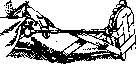
Figure 11. Redressment with the help of rubber traction.
then fixation is performed in a partially corrected position for a period of 5 to 10 days, after which the bandage is removed and R. is repeated. By means of such staged R.
it is possible to achieve the correction of very large deformities, in which a one-time violence would lead to dangerous complications. The methods of grasping the various redressable parts of the body are different. Thus, in the case of a contracture of a limb, the latter is grasped by the hands immediately above and below the flexed joint. Sometimes it proves more convenient to apply pressure with the hands not
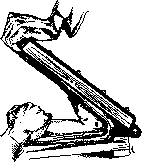
Figure 12. Redressment with the help of Schultze's board.
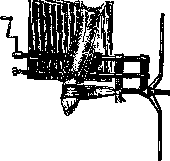
directly to the site of the curvature, for example, in contractures of the knee joint, when correcting diaphyseal deformities at the site of the bone callus. In R. of the shoulder and hip joints, it is important to firmly fix the shoulder and pelvic girdle. For this, in the first case, the patient is placed slightly on his side so that the corresponding scapula is firmly pressed to the plane of the table by the patient's own weight. In the second case, the operator's assistant presses the patient to the table, leaning with his hands on the iliac crests; it is even better to bend the healthy leg and press it with the thigh to the patient's abdomen. The technique of redressment for torticollis is easily understood from figures 1-3. Figures 4-10 depict manual redressment of equinus in clubfoot with the application of a bandage. During the operation in adult individuals, as well as in very rigid forms of curvatures, especially if the operator does not possess great physical strength and the area of application of force is small (foot), one resorts to the help of special devices and instruments. These include rubber traction (fig. 11), König's wedge, Schultze's board (fig. 12), then apparatuses built on the type of a lever or screw: Thomas-wrench, Bradford's redressor-osteoclast, Redard's, Lorenz's (fig. 13), and others. During R., various complications can occur: rupture of large vessels and nerves, constriction of the vascular bed, overstretching of large nerves (more or less persistent paralysis), fracture of healthy parts of the skeleton, reflex convulsions, acute dilatation of the stomach, and fat embolism. To avoid these dangerous disorders, it is necessary to perform the entire procedure of redressment with great attention, to take into account the degree of tissue tension all the time, to fix tissues in plaster only with fully suppressed elastic forces, not leaving any additional corrective function to the bandage, and finally, one cannot operate on patients with the presence of the above-listed contraindications.
M. Friedland. REDUCTION DIVISION (maturation division), cellular division of developing sexual elements (future eggs and spermatozoa), as a result of which the "matured" sex cell—the egg and spermatid—contains a halved number of chromosomes compared to the usual (see Haploid). The morphological details of the process under consideration appear not to be fully clarified, however, studies by a number of authors over the past several decades (Hertwig, Haecker, Grégoire, etc.) allow us to draw the following schematic picture. The process of development of sexual elements falls into periods: 1) multiplication, 2) growth, and 3) maturation. At the end of the growth period, the chromosomes take on a peculiar arrangement within the nucleus, concentrating in one part of it and forming a compact tangle there (synapsis stage, meiosis of some English and American authors). The processes occurring here mainly boil down to conjugation
Figure 1. Phenomena of reduction during spermatogenesis in Tomopteris onisciformis: A—shortly after the last mitosis of spermatogonia; B-D—bouquet stage [B—parallel conjugation (leptotene stage), C—conjugation almost finished, only at the places of chromosome bending are both partners not yet connected, D—pachytene stage]; E and F—strepsitene stage; G—diakinesis; H—metaphase of reduction division, the gap of the equational [division] is visible; I—early anaphase of reduction division; J—the same, from the pole; K—metaphase; L—anaphase of equational division. (According to A. and K. E. Schreiner.)
(connection) of corresponding (allelomorphic) chromosomes, i.e., chromosomes of paternal and maternal origin. As a result, the chromosomes of the sex cells turn out to be split and connected together in pairs. The resulting quadruple groups, each consisting of 4 chromosomes, are called tetrads; their number is equal to half the normal number of chromosomes for a given species. Thus, even before the onset of the reduction division itself, there occurs an apparent decrease in the number of chromosomes (pseudoreduction), associated either with the parallel application of corresponding chromosomes to each other

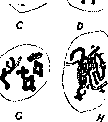
or with other processes of chromosome pairing.
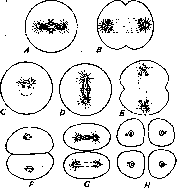
Figure 3. [Caption missing in source text]
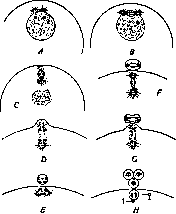
Figure 4. [Caption missing in source text]
depict phenomena of conjugation (parasynapsis, parallel conjugation) or with the attachment of paired corresponding chromosomes at their ends (metasynapsis, conjugation at the ends). The resulting tetrads can be considered as bivalent chromosomes (see), which in a latent form contain two sets of chromosomes. The tetrads pass directly into the metaphase of the first maturation division, as a result of which each of them divides into two double groups (dyads). Immediately after this, usually without a resting stage, the second division occurs, in which the components of the dyad diverge into the daughter cells, each of which thus receives a number of chromosomes reduced by half. On a concrete example of the roundworm Ascaris megalocephala bivalens, these phenomena appear as follows (figs. 2 and 3): in the somatic cells there are 4 chromosomes, from which 2 tetrads, i.e., 8 chromosomes, are formed; as a result of two successive maturation divisions, two chromosomes, i.e., their haploid number, pass into each of the daughter sex cells. Of the two maturation divisions, one is normal, i.e., associated with the divergence of homonymous chromosomes (equational division), the other with the divergence of heteronymous conjugated chromosomes (proper R. d.). Depending on which of these divisions is first, the following are distinguished: 1) post-reduction division, which for the O (paternal) and M (maternal) chromosomes can be expressed by the following scheme: the tetrad at the first R. d. breaks down into two O M, and at the second R. d. into four cells. Diagram of the essential phenomena observed during the maturation of the egg of Ascaris megalocephala. The number of chromosomes is taken as four. A-initial phase; two tetrads have formed in the germinal vesicle; B-tetrads have arranged themselves near the spindle and formed the equatorial plate of the first division for the formation of the polar body; C-mitotic figure has turned; D-formation of the first polar body; each tetrad divides into two dyads; E-the first polar body is ready; it and the egg each contain two dyads; F-beginning of the second division; G-formation of the second polar body and division of the first; each dyad divides into two separate chromosomes; H-final result: three polar bodies and an egg nucleus (oocyte); each contains separate chromosomes (half of those contained in the cells); 1-egg centrosome, which should disappear or degenerate. (After Wilson.) The dyads I- O M. The reduction division is pre-reductional-first, and 2) pre-reductional division, proceeding according to the scheme where the reduction division is first in time. The latter case is apparently most common. In the male and female sex, R. d. proceed fundamentally the same, with the difference that in spermatogenesis, four equivalent cells-spermatids-are obtained from the primary seminal cell (spermatogonium), while in oogenesis, R. d. occurs on the periphery of the oogonium (primary egg cell), and its result is the formation of one full-fledged egg cell and three directing, polar, or reduction bodies, which are abortive egg cells with a minimal amount of protoplasm. Half of the chromosomes pass into the formed directing body (the first directing body, which usually divides in half again); the chromatin apparatus of the egg, without passing through a resting stage, divides again, as a result of which the second directing body is formed. Polar bodies in the overwhelming majority of cases die off shortly after being extruded. In some cases (mollusks), the reverse resorption of the extruded directing body by the egg has been described. R. d. have also been described for plants. In recent years, the research of Belar, Dobell, and Reichenow [Belar (1923-24), Dobell (1915), Reichenow (1921)] has shown the presence of R. d. (sometimes occurring in a peculiar way) also in the simplest organisms. Interesting are the R. d. in parthenogenesis. In diploid parthenogenesis (proceeding with a double set of chromosomes), reduction in its final form is absent, and the only division observed is equational (although sometimes a short-term conjugation of chromosomes is observed). In cases of haploid parthenogenesis (with a reduced set of chromosomes, for example in male bees, mites, etc.), both R. d. occur, and the egg receives a reduced number of chromosomes. Parthenogenetic haploid eggs produce males, in whose spermatogenesis R. d. begins but then breaks off, so that the original half number of chromosomes is preserved.
The theoretical significance of the phenomena of maturation is very great. According to Weismann's (1881) reduction hypothesis and Montgomery's (1901) hypothesis, the conjugation of chromosomes and R. d. ensure some 'revival' of the germ plasm, the appearance of new sets of hereditary factors, which should lead to the possibility of the appearance of the most favorable combinations, which are then fixed by selection. The exchange of homologous hereditary factors received from both parents should occur, according to the currently prevailing views, during the conjugation of chromosomes. The concepts of conjugation and reduction of chromosomes are in good agreement with the basic laws of modern genetics (Mendel's laws, Morgan's theory).
s. zapis'.
Related articles
Cite this page
“Redressment and Reduction Division.” Soviet Medical Encyclopedia. English translation of Bolshaya Meditsinskaya Entsiklopediya, 1st ed. (Moscow, 1928–1936), ed. N. A. Semashko. https://sovietmedicalencyclopedia.com/article/redressment-and-reduction-division/