Navashin, Sergei Gavrilovich
Historical document, translated for reference. It reflects medical knowledge of the 1920s–30s and is not medical advice.
Summary
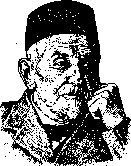
Sergei Gavrilovich Navashin (1857–1930) was a prominent Russian botanist and cytologist, recognized as one of the founders of genetic cytology. He is best known for his discovery of double fertilization in angiosperms and his pioneering research on chromosome structure.
Encyclopedia article (1928–1936)
NAVASHIN, Sergei Gavrilovich (1857–1930), one of the founders of genetic cytology. Upon graduating from Moscow University, Navashin was an assistant to Timiryazev at the university and at the Petrovskaya Academy (1885–1888), and an assistant in botany at St. Petersburg University under Borodin (1888–1894). He defended his master's thesis on the topic 'On the Disease of Birch Catkins.' Studying this disease, Navashin traced fertilization in the birch and made the discovery of chalazogamy in this plant. From this, Navashin took the topic for his doctoral dissertation, which he defended in Odessa while already a professor at Kiev University (1894–1915). In Kiev, Navashin conducted a series of studies on fertilization, among which was the famous study on double fertilization in the Liliaceae. Navashin confirmed this discovery both in orchids, which he had the opportunity to study in Java, and in the Compositae (sunflower). Consequently, double fertilization could be considered a trait common to all angiosperms. Based on this discovery, de Vries explained the phenomenon of 'xenia,' which until then had seemed completely incomprehensible. The topic of Navashin's further research became the variability of nuclear structure in individuals of the same species, mainly the size of chromosomes and their mutual relationships. Based on such differences, Navashin
established two races within a species: one with a nucleus of symmetrical structure, the other with an asymmetrical nucleus. In 1917, Navashin was elected a full member of the Academy of Sciences. From 1915 to 1920, Navashin was a professor in Tiflis. In Navashin's cytological works, subtle observation was manifested, which, in connection with the microscopic technique he raised to a great height, attracted a significant number of students to him. Navashin authored over 80 printed scientific and popular scientific works in Russian and German. The most important of these are: 'Lower Organisms as Pathogens of Tumor-like Formations in Plants' (Russian Archives of Pathology, Clinical Medicine and Bacteriology, Vol. IV, 1897); 'Infectious Diseases of Plants' (a chapter in the book 'Medical Microbiology,' edited by L. Tarasevich, Vol. III, Petrograd–Kiev, 1915); 'The Principle of Continuity and New Methods in the Study of the Cell of Higher Plants' (Journal of the Russian Botanical Society, Vol. I, 1916); 'On Some Principles of the Internal Organization of Chromosomes' (Collection dedicated to K. A. Timiryazev, Moscow, 1916); 'Units of Life' (Proceedings of the Timiryazev Scientific Research Institute, Series 2, Vologda, 1925); 'Sex as a Factor of Organic Evolution' (ibid., Series 9).
Related articles
Cite this page
“Navashin, Sergei Gavrilovich.” Soviet Medical Encyclopedia. English translation of Bolshaya Meditsinskaya Entsiklopediya, 1st ed. (Moscow, 1928–1936), ed. N. A. Semashko. https://sovietmedicalencyclopedia.com/article/navashin/