Wundt, Wilhelm Max
Historical document, translated for reference. It reflects medical knowledge of the 1920s–30s and is not medical advice.
Summary
This article provides a biographical and critical overview of Wilhelm Max Wundt, the German psychologist and philosopher who founded experimental psychology. It details his academic career, his establishment of the first laboratory for experimental psychology in 1879, and his extensive, albeit methodologically flawed, work in ethnic psychology (Völkerpsychologie).
Encyclopedia article (1928–1936)
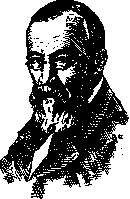
WUNDT, Wilhelm Max (1832–1920), the famous German psychologist and philosopher, founder of experimental psychology. He studied medicine in Tübingen, Berlin, and Heidelberg, where he began his scientific career as a private docent of physiology; he was an assistant to Helmholtz. In 1864, he became a professor of physiology. In 1874, he was elected to the chair of philosophy in Zurich, from where he moved to Leipzig in 1875; here, almost his entire scientific career as an ordinary professor, director of the Institute of Experimental Psychology, scientific researcher, and writer took place. In 1879, Wundt founded the world's first laboratory of experimental psychology and, a few years later, created the scientific journal "Philosophische Studien." Wundt's scientific output is striking in its enormous productivity and versatility, as well as the abundance of his scientific works and fields of research. Wundt was an encyclopedic scientist in the precise sense of the word. A physician and professor of physiology, he was not only a natural scientist but also a philosopher who wrote on ethics and logic, a psychologist who created experimental psychology, and a researcher in the field of cultural history and ethnology, having collected vast material on the development of language, myths, and customs in his ten-volume ethnic psychology ("Völkerpsychologie"). In all these fields of scientific knowledge, Wundt was not a dilettante, and in each, he appeared as a specialist researcher. Wundt's greatest merit lies in the creation of experimental psychology. Psychology was the true center of all his scientific work; natural science (physiology) and cultural history were for him the foundations upon which he sought to build the edifice of scientific psychology; philosophy was for him the dome that completed this building. The reform of psychology carried out by Wundt proved possible precisely thanks to his encyclopedism. He expanded and strengthened the empirical basis of psychology in opposition to the speculative nature of rational psychology.
He instilled in this science the methods and spirit of natural science. "Psychology," says Wundt, "insofar as it exists as a natural science, lies almost entirely in the field of experimental and measurement research. Many of these studies date back to quite a long time ago, and they belong not to psychologists, but to physicists, astronomers, and physiologists, who often stumbled upon them by accident and most often did not suspect their psychological significance." The experimental method was first applied to psychological research not by Wundt, but by scientists of other specialties. Fechner is the true founder of the experimental method in psychology, but it was Wundt who, having completed the work of his predecessors, created experimental psychology as a science, as a systematic and independent discipline. Without experiment, in Wundt's opinion, psychology was doomed to "remain, in essence, unchanged for centuries, since what was scientific in it was barely separated from what belongs to everyday experience." Together with the experiment, a tendency toward precise measurement, toward the establishment of "firm laws that govern phenomena," and a tendency toward transformation into an explanatory science penetrated psychology. In his "Principles of Physiological Psychology," Wundt unfolded a system of experimental research and measurement of elementary psychological processes, proceeding from the physiological conditions of their emergence and course; in fact, this meant a rejection of the study of psychological processes outside their connection with physiological processes, an attempt to establish psychological research on objective foundations that allow for precise measurement. However, the essence of the psychological experiment for Wundt still remained introspection. Wundt carried out a similar expansion of the empirical basis of psychology in his "Völkerpsychologie." True, here, despite the enormous factual material collected by Wundt, he failed to enrich psychology with a system of positive knowledge, as he did in the field of physiological psychology, and to create a new scientific discipline. The greatest drawback of this work is the methodological lack of development of the problems and method of ethnic psychology. Wundt failed to clarify the distinctiveness of this discipline and its methodological differences from individual psychology. The fundamental constructions of his ethnic psychology reveal a clear analogy with individual psychology and a direct dependence on the latter. "Ethnic psychology," says Wundt, "wishes to be nothing other than an expansion and continuation of psychology into the field of phenomena of social life"; therefore, the tripartite division—language, myth, custom—corresponds, according to Wundt, to three groups of psychological processes: representation (language), feeling (myth), and will (custom). Another consequence of the methodological lack of development is, as already stated, the insufficiently clearly drawn distinction between the psychological point of view and the historical, ethnographic, and linguistic ones.
The reason why Wundt could not create an independent scientific discipline out of the psychology of peoples is quite clear: he had nothing to rely on, unlike when he created physiological psychology; there, there was the solid and developed soil of natural science, while here, there was a complete absence of any truly scientific theory of social and historical phenomena. The scientific and fruitful theory of historical materialism was alien to Wundt. Therefore, the idea of social psychology proved unrealizable for Wundt. Wundt's psychological doctrine is based, mainly, on the theory of association and apperception. For Wundt, association denotes all kinds of connections introduced by the subject into sensations, representations, feelings, and into all elementary psychological processes in general, creating new qualities in the complexes arising in this way—qualities not contained in the elements forming the complex. Wundt called such connections creative syntheses of the psyche. Wundt distinguished several forms of association: fusion, assimilation, complication, etc. The difference between this doctrine and the traditional association theory consists, firstly, in the emphasis on the subjective processing of psychological elements during their associative combination into "psychic formations" and, secondly, in the expansion of the concept of association: it covers, according to Wundt, simultaneous connections of elements, as well as sequential emotional elements and cognitive ones (sensations). Along with associative connections, Wundt distinguished apperceptive ones, the main difference of which is that they are experienced by us as the internal activity of our consciousness, while associative connections are formed in a passive state of consciousness. Apperception for Wundt is an internal volitional process accompanied by active attention and a feeling of activity. Wundt brings the concept of apperception closer to the will, the roots of which he saw in affect. The concept of apperception in Wundt is thoroughly permeated with metaphysical-idealistic views and is connected with his philosophical views on the psyche. Wundt stood on the point of view of psychophysical parallelism and believed that this principle "necessarily leads to the recognition of an independent psychic causality." He believed that the basic auxiliary concept of psychology is the soul, just as matter is an auxiliary concept of natural science. In doing so, he replaced the concept of the substantiality of the soul with the concept of actuality, from which the idealistic metaphysics of this doctrine did not move closer to a scientific construction. But, as already stated, Wundt's strength and significance lie not in his philosophical constructions and not even in the positive content of his psychological doctrine, but precisely in the creation of experimental psychology. Main works of Wundt: "Völkerpsychologie," B. I–X, Leipzig, 1912–23; "Elemente der Völkerpsychologie," Leipzig, 1913; "Grundriss der Psychologie," Lpz., 1911 (trans.); "Logik," B. I–III, Stuttgart, 1906–08; "Naturwissenschaft und Psychologie," Stuttgart, 1911; "Hypnotismus und Suggestion," Lpz., 1894; "Die Prinzipien d. mechanischen Naturlehre," Stuttgart, 1910. In 1893–1902, collections of works by Wundt and his students were published in Leipzig: "Philosophische Studien." The main works of Wundt translated into Russian: "Principles of Physiological Psychology," vol. I–III, SPB, 1912–13; "Lectures on the Soul of Man and Animals," SPB, 1894; "Hypnotism and Suggestion," SPB, 1898; "Outlines of Psychology," M., 1912; "Introduction to Psychology," SPB, 1912; "Introduction to Philosophy," M., 1902; "Fantasy as the Basis of Artistic Activity," SPB, 1914 (part of the section on art from "Völkerpsychologie"); "Ethics," SPB, 1887–88.
Related articles
Cite this page
“Wundt, Wilhelm Max.” Soviet Medical Encyclopedia. English translation of Bolshaya Meditsinskaya Entsiklopediya, 1st ed. (Moscow, 1928–1936), ed. N. A. Semashko. https://sovietmedicalencyclopedia.com/article/wundt-wilhelm-max/