Utilization
Historical document, translated for reference. It reflects medical knowledge of the 1920s–30s and is not medical advice.
Summary
An overview of the utilization of waste products and refuse in industry, agriculture, and municipal management from a 1930s Soviet perspective, detailing sanitary regulations and processing methods.
Encyclopedia article (1928–1936)
UTILIZATION, the use of refuse and waste for various purposes in industry, agriculture, and animal husbandry. Utilization plays a major role as one of the methods of combating production losses. Under the conditions of the national economy of the USSR, utilization is of great importance as one of the sources for mobilizing internal resources. The methods of utilization are extremely diverse, as are the types of refuse. The following types of utilization are distinguished: 1) utilization of industrial and agricultural waste; 2) utilization of solid municipal refuse (garbage) by separating out those parts that can be used in industry as raw materials; 3) utilization of feces and other animal wastes in agriculture as fertilizer and biofuel; 4) utilization of kitchen waste and food leftovers in animal husbandry and poultry farming as feed for livestock and poultry; 5) utilization of animal carcasses and food confiscates by processing them at utilization plants. Utilization deserves special attention from a sanitary standpoint, since it deals with waste that poses a sanitary and epidemic hazard (see Refuse, Garbage). At the same time, the processing of waste in the course of its utilization is associated with a whole range of sanitary hazards: the emission of foul gases, the formation of heavily polluted and contaminated wastewater, etc. Therefore, utilization requires compliance with the strictest sanitary conditions, regulated by special mandatory ordinances, and the most careful sanitary supervision must be maintained over all its stages. If it is impossible to meet these requirements for technical or economic reasons, utilization must not be permitted, and the waste must be subjected to destruction. During epidemics, the utilization of certain types of waste may be temporarily suspended at the demand of the sanitary inspection. The utilization of industrial and agricultural waste aims either at reducing production losses through the most complete utilization of raw materials or at using waste as raw material for subsidiary industries and in other branches of industry. The first type of utilization is carried out by the most complete use of all substances used in production, the separation of useful parts from wastewater, exhaust gases, and the capture of dust containing particles of valuable substances. This also includes the regeneration of lubricating oils through their purification, wiping materials, etc. The second type is carried out either by using the waste of one production process in another as raw material (e.g., using textile waste or so-called ends—old wiping material—for paper production) or by organizing utilization workshops within the production facility itself (e.g., organizing the production of consumer goods from metal waste of heavy industry, the production of toys from the waste of woodworking factories, etc.). The organization of the collection of agricultural waste—bones, horns, wool, bristles, rags, bird droppings (guano)—can be carried out either by collecting waste in collective farms and state farms through special collectors, delivering them to collection points and sending them for utilization to relevant industries, or by organizing the industries themselves directly in state farms and collective farms. The latter is most desirable, since this eliminates the transportation of waste, and its utilization becomes an additional source of increasing the profitability of agriculture and provides an opportunity for the most complete coverage of waste thanks to the economic interest of the collective farm and state farm. However, compliance with proper sanitary conditions during utilization is difficult to achieve in small enterprises, and therefore utilization should be carried out primarily in the largest farms. The utilization of urban solid waste usually consists of separating bones, paper, metal, textiles, bottles, corks, ropes, rubber, and leather from garbage. The amount of recyclable raw materials in garbage varies sharply depending on the composition of urban refuse and the method of its collection. With careful mechanical analysis of garbage in the laboratory, the amount of items included in the assortment of recyclable materials often reaches up to 20% by weight of the entire mass, whereas when collected at dumps by scavengers, this amount rarely rises above 1.5-2%. This is explained by the fact that not all items located at dumps go for utilization, since a significant part of them is already depreciated while lying in the garbage can and then at the dump. The method of collecting recyclables at dumps and from garbage cans by ragpickers, which has not yet been completely eradicated, is unacceptable from sanitary considerations and must be replaced by more perfect ones. The only acceptable methods for collecting recyclables should be recognized as collecting it at the place of formation (in apartments and institutions) or sorting garbage at special mechanized facilities, where garbage is brought from an entire city district and where valuable recyclables are sorted out before garbage incineration or its destruction by another method. The first method, so-called house-by-house collection of recyclables, is carried out by installing at least two containers for waste collection in houses and institutions. Recyclables are placed in one of them, and the remaining garbage in the other. House-by-house collection yields recyclables not contaminated by rotting waste; workers do not have to dig in the foul-smelling mass of garbage, and furthermore, this method most fully covers so-called household recyclables, which usually do not end up in the garbage can: old clothing, wastepaper, bottles, etc. In order to avoid the need to have two organizations engaged in the collection and removal of waste, and to give the entire system the greatest regularity, house-by-house collection of recyclables should be carried out simultaneously with the organization of municipal cleaning of the city by the forces of municipal management. For the success of the collection, it is desirable to interest house administrations, comandants, and housewives with at least a small payment for the collected recyclables. The amount of recyclables in house-by-house collection is 5-6% of the total mass of garbage. Sorting garbage at central stations is permissible only under the condition of their mechanization and proper sanitary-technical equipment (ventilation, showers for workers, etc.). The most common scheme for garbage utilization stations or plants is as follows: first, fines are sifted out of the garbage using sieves with a hole diameter of no more than 20 mm. The fines go for fertilizer or as a building material along with the slag of the garbage incineration furnace. After sifting, the garbage enters a conveyor belt, moving along which it is subjected to sorting partly manually and partly by means of mechanisms: for example, the selection of paper occurs using a strong exhaust fan, and the separation of metal by an electromagnet. The remainder of the garbage goes either into the furnace or into agriculture. In some cities there are more complex installations, in some places the emphasis is placed on the use of garbage as fertilizer (Vyster in Holland, stations in Berlin, Puchheim), or the refuse undergoes complex processing to obtain industrial raw material or fuel (Sutom system, station in Manchester, Paris, Cologne). At these stations, not only valuable items—recyclables—are selected, but organic residues are also sorted, pressed, and processed in special apparatus to obtain so-called garbage fiber (used for animal bedding, for the production of cardboard, roofing felt, etc.). At the same time, production becomes so complex that, taking into account the presence of necessary additional workshops—washing rags, bottles, etc.—such installations should already be called garbage utilization plants. In the USSR, the construction of such plants is planned in large cities. Among the rarer methods of garbage processing, one can mention the method of extracting fat from waste by treating it with steam in special apparatus together with fat-extracting substances, or by pressing. This method, which was used for some time in the USA, has now been abandoned because it turned out to be unprofitable and very unsanitary. The quantity of valuable items obtained at garbage utilization stations or plants varies greatly depending not only on the composition of the garbage, but also on the methods used. At an experimental installation set up in Moscow at the garbage incineration station in 1929/30, where garbage was subjected to sifting in a rotating drum and manual sorting as it passed on a conveyor, the amount of screenings was about 50%, and recyclables did not exceed 5% by weight of the total mass of garbage. The use of garbage in agriculture can take place either for fertilizing fields (application rate for the middle zone of the Union is 100-200 metric tons per hectare) or as a biofuel in hotbeds and greenhouses (rate is 2 m3 of garbage per frame or per 1 m2 of greenhouse area). Sometimes garbage is processed into fertilizer in special chambers using the Beccari method (see Garbage). Processing garbage in chambers and using it in hotbeds and greenhouses are the most impeccable from a sanitary standpoint, because the high temperature contributes to the destruction of pathogenic microbes, and contact between garbage and vegetables hardly takes place (garbage in hotbeds is covered with manure and soil) (Fig. 1).
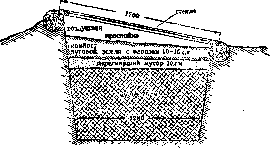
Figure 1. Section of a hotbed with garbage.
in hotbeds in autumn and spring humus goes for fertilizer, i.e., not only the physical (biofuel) but also chemical properties of garbage are used. The hotbed and chamber method of garbage utilization must find the widest dissemination in the USSR as successfully combining sanitary tasks with utilization. At the present time, the collection of food waste (kitchen and table scraps) for feeding livestock, mainly pigs, is widely used. The organization of the collection of this waste in all public catering places is mandatory. The amount of public catering waste depends on the quality and method of food preparation and ranges from 150 to 200 g per 1 meal. With individual meals, it is expressed at approximately 250 g per 1 person per day. In hospitals, sanatoriums, and the like, the amount of waste is even greater: from 300 to 500 g per bed-day. In terms of nutritional value, 3 kg of food waste is equivalent to 1 kg of oats (1 feed unit). Approximately about 10 kg of waste goes to 1 pig per day. To collect waste in public catering places, metal, hermetically sealed tanks are installed, for which a special room must be set aside. Tanks are removed according to a replaceable dish system. At the pig farm, the waste is either boiled or fed to pigs in raw form. Most fully of all types of waste, the carcasses of dead animals and food confiscates are utilized, the processing of which takes place in plant-type installations. Their setup is absolutely mandatory at slaughterhouses. In modern slaughterhouses as an integral part of meat-packing plants, the following types of utilization take place: 1) utilization of conditionally fit meat by salting, smoking, or steam sterilization in special apparatuses (Gennicke); 2) utilization of blood: obtaining hemoglobin as a therapeutic agent, for clarifying wine, syrups, preparing dried blood used as a feed agent, manufacturing blood serum albumin for paints, glue, chemicals used in chemical industries; 3) utilization of kanyga [stomach contents]: obtaining fuel by briquetting and fertilizer by composting in pits with manure, blood, etc.; 4) utilization of entrails and individual parts of animals: rumen, reticulum, omasum, abomasum, offal (head, legs, heart, kidneys, lungs, liver, larynx, trachea); used as a food product, feed agent, and processed into fertilizer fertilizers; 5) utilization of fat: processing of raw fat for technical purposes by boiling in boilers (fat-melting shops) or steam treatment, production of margarine; 6) utilization of bones to obtain glue; 7) utilization of horns, hooves, bristles, hair, skin to obtain glue, fertilizers, in the production of horn products, brushes, and in the leather industry; 8) utilization of endocrine and secretory glands to obtain medical preparations; 9) utilization of animal carcasses in special plants with rather complex equipment (De la Croix, Podevil, Gennicke, Hartmann, and others). The main process consists in the thermal treatment of carcasses with steam under high pressure. Perfect apparatuses (for example Hartmann's) make it possible to process a carcass at a temperature of 150° and a pressure of 5 atmospheres. High temperature and pressure in utilization apparatuses provide a complete guarantee in the sense of disinfecting the carcass, including an animal that died from anthrax, which makes it possible to consider utilization plants as sanitary installations. In contrast to ordinary fat-melting shops, in which the boiling of a carcass takes place in open boilers at a temperature
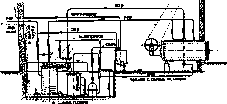
Figure 2. Utilization plant of the Moscow city slaughterhouses.
not exceeding 100°, all carcasses, primarily contagious ones, must be sent to utilization plants on a mandatory basis, which will make it possible to eliminate cattle burial grounds. The construction of a utilization plant is mandatory at any well-appointed slaughterhouse (Fig. 2). In medium and small towns, utilization plants should be built that could serve not only a given populated area but also the district. A utilization plant of even the most perfect design must be considered a harmful production and located outside the boundaries of the populated area (2 km from housing). Being part of a meat-packing plant, the utilization plant must be built on an isolated plot and have independent access roads.
4bv
In sports, the problem of endurance is of extremely great importance, i.e., ensuring the maximum efficiency of the organism, even at the cost of the greatest tension of all its functions. Under production conditions, such a task does not arise, and those changes in the organism caused by work can only to a relative extent be compared with changes in functions during sports. Industrial utilization can be partially characterized by the work capacity curve. If performance is recorded by hours of work, it turns out that it is distributed in accordance with the following curve (see figure). The course of this curve is affected not only by fatigue, which causes a decrease in the curve at the end of the first half of the day and by the end of the entire day, but also by factors such as trainability, which determines the fact that maximum productivity is achieved not from the very beginning of the working day, but only gradually. A similar picture is given by the curve of labor productivity by hours of work. (According to data... both curves are often characterized by a rise toward the end, a final burst, which is caused by the expectation of the end of work and testifies to the exceptional importance of the psychological factor as determining work capacity. The course of development of industrial utilization can also be characterized by the curve of the distribution of accidents by hours of work. The level of labor productivity is determined not only by the development of fatigue, but also by trainability. The significance of the psyche, in particular emotions, in the development of fatigue is well known. Who does not know that it is easier to march to music, that an encouraging word spoken in time makes work easier, that a mother can watch at the bedside of a sick child for several days without feeling tired, and so on. Along with the fatigue-reducing effect of emotions, their reverse influence is also noted, for example, the strongest fatigue, often accompanied by a feeling of fear. In addition to the influence of emotions, there are also known cases of influence on the feeling of fatigue, and apparently also on utilization, by processes occurring in the sphere of consciousness. Examples of this can be found in the practice of our construction, where the consciousness of the obligation assumed is a stimulating factor. Among the most interesting features of the picture of utilization is the sharp difference between utilization during static and dynamic work. It is known that, despite the negligible expenditure of energy compared to dynamic work and often elusive changes in the intensity of gas exchange, in the electrical properties of nerves and muscles, etc., static work is so fatiguing that, for example, holding an arm extended in a horizontal position for more than 3-4 minutes turns out to be almost impossible. Many authors (Lindhard et al.) tried to explain the rapidly onset of utilization during static work by the fact that it hinders the outflow of blood from the body part under static tension, as a result of which its supply of oxygen and the removal of harmful metabolic products deteriorate. They also tried to explain the matter by the tension of tendons, periosteum, etc. However, sick catatonics, people in a state of hypnotic catalepsy, without any utilization can perform the same static work for an hour or longer, without experiencing any utilization. Naturally, another explanation must be found here. An interesting feature of utilization was discovered by a number of authors (Mosso, Ullmann, etc.): after full utilization and cessation of work were achieved during work on the ergometer, it turned out to be possible to restore the working capacity of the muscles by electrical irritation of the motor nerve; after reaching utilization from electrical irritation, the muscle's ability to contract was restored in the order of voluntary central innervation. These experiments undoubtedly shed light on the nature of utilization, as they exclude the validity of the idea of the localization of utilization in the muscles or nerves. Speaking of utilization, we naturally cannot abstract ourselves from the changes that take place in the organism during work. The fact that as the severity of work increases, utilization also intensifies, forced us to study these changes with special intensity and look for the riddle of utilization in them. It is not surprising that a colossal number of works are devoted to such research. Here we will give a very brief outline of these changes. From the cardiovascular system, an increase in the blood supply to working muscles up to 6-9 times is noted. This is ensured by an increase in the work of the heart, expressed in an increase in the stroke volume and pulse rate. In this case, trained individuals predominantly change the stroke volume, while untrained individuals change the frequency of contractions. The pulse rate during heavy muscular work can increase 2.5-3 times. In individual cases, arrhythmias are observed. Blood pressure (maximum) during work increases, while the minimum falls, so that pulse pressure increases. At the same time, the heavier the work and the less trained the worker is, the more the maximum pressure increases. The duration of voluntary breath-holding decreases. Breathing during heavy work becomes more frequent and superficial. Respiratory rate reaches 35 and more. Shortness of breath appears. The ventilation volume can increase, reaching 60-70 liters per minute. At the same time, the percentage of oxygen utilization increases. In accordance with the growth in the severity of the physical load given by this work, the body's oxygen consumption and its energy metabolism also increase. However, oxygen consumption increases not only during work, but also in the recovery period after work, oxygen consumption remains increased for some time in accordance with the magnitude of the "oxygen debt." In studying the intensity of gas exchange during work and the features of the recovery period, attempts were made to find a criterion for assessing utilization. These attempts, however, did not yield the desired result, because they were based on the incorrect concept that the severity and fatiguing nature of work are determined by the energy expenditures characterizing it. Regarding red blood and hemoglobin, no special changes are noted during work. Regarding leukocytes, significant changes are noted, expressed in a certain leukocytosis and a significant change in the morphological picture. During work, so-called myogenic shifts are observed, which boil down to relative and sometimes absolute lymphopenia and eosinopenia with a significant shift to the left in the neutrophilic group. Attempts to connect various types of changes in the morphological picture of white blood with various degrees of fatigue have proved, however, to be insufficiently substantiated. The reserve alkalinity of the blood during heavy work drops noticeably due to the displacement of CO2 from the blood and the binding of alkaline ions by lactic acid. The concentration in the blood of lactic acid, which plays an essential role in the chemistry of muscular activity, increases during work. Recently, however, there are data on its decrease during work. Likewise, the blood sugar concentration turns out to be a highly variable quantity and cannot be associated with a certain degree of severity of work, showing both a significant increase and a sharp decrease during work. In heavy, fatiguing work, such as in strenuous sports, protein in the urine, hyaline and even granular casts often appear. In heavy work against the background of malnutrition, acetone is detected in the urine. Regarding muscles, it is known that under conditions of preserved blood circulation, they do not show significant changes during fatigue. The same can be said about nerve conductors. They, like muscles, are practically untiring. Nerve centers, however, change significantly upon fatigue. In strong degrees of it, even morphological changes are discovered in them, both in the protoplasm and in the cell nuclei. However, almost all the changes described above in various organs, with the exception perhaps of the nerve centers, are fairly quickly eliminated after the cessation of work, while utilization persists much longer. This discrepancy makes one treat the evaluation of changes in the functions of various organs as signs of utilization with extreme caution. Regarding the essence of utilization, a significant number of diverse theories have accumulated in physiology. The oldest and most elementary of them is Schiff's theory, which explains utilization by the exhaustion of the organ and the disappearance of the substance that is the source of energy, in particular glycogen. Undoubtedly, this theory was inspired by experiments with an isolated muscle. Moreover, it connects the entire phenomenon of fatigue with individual organs. However, it contradicts facts indicating that even with utilization leading to the death of the animal, quite sufficient amounts of glycogen are found in its tissues. The same applies to the isolated muscle. If the fatigued muscle is washed with a physiological solution, it regains the ability to contract. As for the whole organism, this theory ignores the fact that dissimilation processes, which are the source of energy during work, are inextricably linked with assimilation processes.
Essentially, this theory is aprioristic, since it is not supported by factual data at all. Despite the fact that it in no way explains the features of fatigue set forth above, this theory has still had its supporters until recently. The second theory reduces fatigue to the suffocation of organs due to a lack of oxygen. The fact that during work the blood supply to a muscle increases 5-6 times makes the possibility of such a mechanism of fatigue generation doubtful, since the inflow of oxygen to tissues increases significantly, which is also favored by the increase in pulse rate and systolic volume. This theory of suffocation adjoins Pflüger's clogging theory. This theory is consistent with the fact that for a number of processes, in particular enzymatic ones, it is known that the accumulation of reaction products inhibits the further course of the process. True, under conditions of preserved blood circulation, this circumstance has a more limited significance. Under the condition of enhanced blood circulation in a working muscle, it is difficult to speak of metabolic products being retained in this muscle to a greater extent than in other parts of the body. Rather, one could speak not of the clogging of muscles with metabolic products, but of a change in the physicochemical state of the muscle. We cannot accept Pflüger's theory at the present time, although we must recognize the possibility of utilizing the provisions put forward by it to explain certain phenomena during fatigue. However, one cannot agree at all with the concepts developed on the basis of this theory concerning the connection of fatigue with special «fatigue substances». Fatigue is associated with the accumulation of various substances. Particular attention in this regard was paid to lactic and phosphoric acids as products of intermediate metabolism of the muscle. Theories of this kind, attributing the cause of fatigue to certain substances, incorrectly illuminate the physiological role of these substances. They also lead to the necessity either to recognize that any manifestation of the vital activity of the organism is accompanied by fatigue, or, conversely, to tear fatigue in its essence away from the processes underlying the vital activity of various organs and systems of the organism. Both are incorrect. In the latter direction, the toxin theory of Weichardt takes an especially extreme position. He attributed fatigue to a special fatigue toxin—kenotoxin, a substance that plays no role in the chemistry of normal muscular activity. This theory is incorrect from both the factual and principled sides, since it considers fatigue as something independent of physiological changes in the organism during the work process. A number of authors, such as Mosso, Lagrange, and Newman, associate fatigue with changes in the central nervous system. It is characteristic of all the listed theories, except Weichardt's, that they consider fatigue as an isolated process in the muscles, in the brain, or in other organs, and not as a change in the whole organism. This is their main principled flaw. Considering changes in organs in isolation from changes in the organism, these theories are unable to correctly explain the essence of fatigue. Levitsky's theory considers fatigue as a general process in the organism, as a biological signaling of the danger of disorganization of the functions of a working organ on the basis of a deficit of specific energy sources. For him, fatigue is a general feeling of the same type as the feeling of hunger. The anatomical basis for this feeling is the vegetative system and subcortical centers. According to Levitsky, the autonomous nervous system possesses its own spontaneous rhythm associated with the rhythms of subtle molecular processes. These rhythms are independent of the activity of the conscious-volitional sphere. The rhythms of the vegetative system predetermine the rhythm of our activity. If we set the organism different paces of activity, a collision will occur between consciousness and its rhythms and the rhythms of the autonomous system, a collision leading to the disorganization of the working function. The autonomous system signals the danger of this disorganization. This signal is fatigue. Thus, according to Levitsky, fatigue is evidence of the discrepancy between our activity and biological rhythms, of our captivity by these rhythms of the vegetative system and molecular processes (incidentally, Levitsky does not explain at all what these rhythms are). Considering fatigue as a general feeling, Levitsky believes that objective changes in the organism are already outside the limits of fatigue. «Those pathological changes, the cause of which is usually sought in fatigue and overwork, do not depend on fatigue, but are, on the contrary, the result of ignoring fatigue as an indicator of the danger of function disorganization; it is precisely in them that this very disorganization of functions manifests itself.» Although individual elements in the views developed by Levitsky are of undoubted interest, his general concept suffers from apriorism and is essentially idealistic. It transfers fatigue only into the sphere of the subjective, tearing it away from the base of objective changes in the organism. Having reviewed the main theories of fatigue, we see that none of them is satisfactory. All these theories do not give any acceptable explanation of all those features that characterize the factual side of the phenomena of fatigue outlined above. We have seen that almost all of them are occupied with solving the question of what exactly gets fatigued in the organism and what those changes in the organs are that determine its fatigue. Let us sort out the first question. Usually, fatigue is associated with the organ that takes part in a given work. But of course, a working organ cannot be isolated from the organism as a whole. And if some work is performed, for example, by a group of muscles of the arm, then at the same time the central nervous system, the heart, the lungs, and all other organs and systems also take part in the work. Of course, the degree of their participation in this is not the same. Therefore, when it is said that fatigue is always fatigue of the organism as a whole, this does not mean that in different cases fatigue will be the same. Although in all these cases we will be dealing with the fatigue of the whole organism, it will differ depending on the source of fatigue, which will determine the entire picture, and its difference will be based on a different degree of involvement of different organs in work. Therefore, when analyzing the picture of fatigue, we must strive in each case to give a characterization of the changes in the state of the organism and the role of individual organs in this change. Analyzing the second question—concerning the nature of the changes occurring in organs during fatigue—we must approach it from the standpoint of clarifying the specificity of these changes for fatigue. Can we say that in various cases of fatigue we have the same changes causing the onset of fatigue? Experimental material on this issue is still completely insufficient. The formulation of such a question is possible only in the event that fatigue were associated with the most general processes underlying the activity of various organs and systems of the organism, or if, despite all differences, in all cases of fatigue there took place the participation of some definite organ, which by its changes determines the fatigue of the organism. A number of data on the physiology of the central nervous system give reason to assume that it determines fatigue. True, with such a formulation of the question, the role of the remaining organs is reduced to a minimum, and the fatigue of the organism is substituted by the fatigue of the central nervous system. Its role is undoubtedly great, especially taking into account the latest data on the nervous regulation of functions in the organism. A number of insufficiently understood phenomena in the field of fatigue are significantly clarified if we consider them from the standpoint of the fatigue of the central nervous system. However, framing the question in such a form would be incorrect. We must necessarily take into account the changes in the remaining organs as the basis of fatigue. But these changes are by no means specific to fatigue. Essential from the standpoint of understanding the essence of fatigue is the question of what relationship exists between the changes characterizing fatigue and the changes that usually occur in the organism in the process of work. We must view the matter in such a way that those changes in various organs and systems that arise in them during work, at a certain combination of them and a certain degree of these changes, create a qualitatively different state of the organism, which determines both the change in its working capacity and its different reaction to a repeated working load. Thus, any fatigue is connected in its nature with those changes that occur in the organism during work, but these changes do not always lead to fatigue. It arises only at a certain combination and degree of these changes, as a result of which the reaction of the organism to the working load will change. The very picture of fatigue will be different depending on the change in the functions of which organs and systems led to fatigue. The foregoing of course rejects the notion of specific changes of fatigue. It is quite natural that the central nervous system occupies a central place in this picture.
The aforementioned difference between utilization after static and dynamic work can be quite satisfactorily explained by the fact that during static work there is prolonged excitation of the same group of cells in the nerve centers that excite the activity of a given group of muscles, whereas during dynamic work various groups of nerve cells connected with different groups of muscles taking part in the work are excited. While one group of nerve cells is excited, another rests. This alternation of the excitation of various cells is the reason why dynamic work is significantly less fatiguing than static work. That the central nervous system, and primarily apparently the cortex, is connected with utilization even during dynamic work is illustrated by the example of parkinsonism. It is characterized by the continuous contraction of individual muscle groups, and utilization does not occur despite the extreme duration of the suffering. This can be explained by the fact that these movements occur without the participation of the cortex. Similarly, movements that acquire an automatic character are less fatiguing. The positive influence of emotions and the mental state can likewise be understood as the switching of processes in the central nervous system to other sensory areas, thanks to which the feeling of fatigue is reduced or even removed. Along with this, the sympathetic nervous system and the endocrine system can undoubtedly play a role here. The experiments of Orbeli and Ginetsinsky, conducted on a neuromuscular preparation, revealed the important role of the sympathetic nervous system in this sense. It is already evident from what has been set forth that, despite the exceptional importance of the central nervous system for the entire phenomenon of utilization, it cannot be connected solely with the central nervous system. From the data on utilization set forth above, the directions along which the choice of methods for its research proceeds also follow. It is quite natural that methods for investigating utilization are connected with those concepts of its essence that are developed in various theories. Thus, for example, attempts to characterize the degree of fatigue by the amount of lactic or phosphoric acid in the blood, by their content in the urine, or of lactic acid in sweat are undoubtedly connected with the clogging theory. On the other hand, the investigation of, for example, sugar in the blood is accepted as a way to assess utilization, undoubtedly proceeding from the exhaustion theory. Along with this, concepts linking utilization with changes in certain organs and systems have led to attempts to quantitatively characterize utilization by changes in pulse, blood pressure, blood composition, lung ventilation, gas exchange, changes in the composition and properties of urine, etc. In the very recent period, methods making it possible to assess the state of the nervous system, particularly the central one, such as the study of chronaxie, action currents, skin currents or the psychogalvanic reflex, sensory organ thresholds, etc., have been intensively developed. It seems completely impossible even to list all those methods of research that have already been applied or can be applied in the study of utilization. Taking into account that during work the functions of all systems and organs of the organism change, different methods of research can be used for different types of labor, making it possible to detect changes in the function of precisely those organs and systems that undergo the greatest changes during a given work. Therefore, the number of possible research methods is truly immeasurable. It is only important to correctly choose those of them that in a given specific case are the most appropriate. The main task consists in detecting changes in the state of the whole organism during research. This task can be resolved with the help of research methods of individual organs or systems, since each individual function experiences the influence of all other organs and in its manifestation reveals these influences. It is only important to know the used method in detail and comprehensively in order to reveal to what extent the detected changes can be attributed to local influences and to what extent to general ones. In addition, one needs to know the people who serve as subjects in order to be able to choose those research methods that in given individuals will reveal changes in the general state of the organism to the greatest extent. Thus, the choice of research methods will depend both on the type of labor during which utilization is investigated and on the characteristics of the subjects being studied. In all these studies, it is important to catch the dynamics of changes. Therefore, research must be conducted not only during work or immediately after it, but also during the entire recovery period. At the same time, it was discovered that recovery, studied by individual indicators, often occurs very quickly, while utilization has not yet disappeared. This dissociation indicates that all those research methods that are assumed to study utilization are essentially studying not it, but those changes in the organism that usually accompany work. Taking into account that utilization, as stated above, represents a combination of altered functions determining the altered reaction of the organism to a load, we must apply the analysis of the organism's reactions to a certain standard load for the study of utilization, i.e., various kinds of functional tests, which can indeed detect the change in the state of the organism characteristic of utilization. One of the very fruitful ways to study utilization is the analysis of the quantity and quality of production at various stages of work. At the same time, it must be borne in mind that not only utilization, but also a number of other factors, up to such things as attitude towards work, etc., exert an influence on them. Therefore, the use of labor productivity as a method for assessing utilization must be carried out with careful consideration of all accompanying factors and with a detailed knowledge of all the features of a given production so as to be able to correctly assess the causes of certain changes in the quality of work. Some methods were developed specifically for the study of utilization. These include such devices as the dynamometer and ergograph. However, these methods did not justify the hopes placed on them, because they usually served to study a function that was not used in the process of work, and therefore could not reveal the onset of utilization. In addition to those mentioned, psychotechnical research methods can be used to assess utilization (see Psychotechnics). Since utilization causes a decrease in working capacity and labor productivity, the development of measures to reduce utilization is extremely important. These measures can be of two kinds. First of all, this includes the development of a rational labor regime, the introduction of periodic breaks in work and the rationalization of the use of these breaks, the improvement of working conditions, etc.—all that constitutes the content of labor protection work. The introduction of timely rest breaks contributes to a significant reduction in utilization and an increase in labor productivity. An essential measure for combating utilization is the introduction of physical exercises during breaks, the so-called physical culture pauses. Measures of another type are attempts to overcome already onset utilization and increase working capacity with the help of various substances, wherein some of them contribute to a more intensive mobilization of the organism's reserve forces and the strengthening of its regulatory mechanisms, others—to raising the tone of the organism or individual organs, and finally others—to artificial excitation associated with the suppression of the feeling of fatigue. The first group can include such measures as the administration of sodium phosphate recommended by Embden, intended to improve resynthesis processes in muscles. He proposed a special preparation "recretal" for this purpose. The introduction of rational drinking regimens with the addition of soda or sodium chloride should also be classed here. The latter is of primary importance in utilization associated with a violation of thermoregulation and significant water losses. The administration of sugar during work requiring significant tension of forces is recommended by many, with 100–150 g of sugar in a number of cases very sharply increasing working capacity. The second group of substances includes such things as, for example, caffeine, strychnine, and kola nuts. Regarding the latter, there is data that they possess the property of significantly increasing working capacity, especially during work with significant neuro-psychic tension. This data, however, is not indisputable. Finally, the third group includes the administration of narcotics that suppress the feeling of fatigue thanks to a general excitatory effect on the central nervous system at a certain stage of their action. Such agents are primarily alcohol, ether, and the like. In capitalist countries, the use of various kinds of "dopings," i.e., excitatory substances causing an increase in working capacity and a decrease in the feeling of fatigue, is widespread. The main drawback of their use is that it is carried out without taking into account their harmful effect on the organism in many cases and that the administration of dopings substitutes for ensuring the normal rest of the worker and the complete restoration of his strength. As a result, rapid wear and tear of the organism occurs.
See also Labor, Physiology of labor.
Related articles
Mentioned in
Cite this page
“Utilization.” Soviet Medical Encyclopedia. English translation of Bolshaya Meditsinskaya Entsiklopediya, 1st ed. (Moscow, 1928–1936), ed. N. A. Semashko. https://sovietmedicalencyclopedia.com/article/utilization/