Telephone Operators
Historical document, translated for reference. It reflects medical knowledge of the 1920s–30s and is not medical advice.
Summary
This article from the 1928–1936 Soviet Great Medical Encyclopedia describes the professional specialization of telephone operators at manual telephone exchanges. It details the specific roles of different types of operators, such as distribution and multiple operators, who were responsible for connecting and disconnecting subscribers.
Encyclopedia article (1928–1936)
TELEPHONE OPERATORS. At modern (manual) telephone exchanges, the profession of telephone operator is differentiated into a number of detailed professions: distribution, multiple, suburban, long-distance, control operators, and others. The characteristic features of the labor process of telephone operators are most typically represented in the work of the first two of the listed professions, and especially in multiple operators, who directly perform the main task of the telephone exchange—the connecting and disconnecting of subscribers. The purpose of the distribution operator (or otherwise the
8»7
so-called "mute" operator)—a profession appearing at large exchanges with a large number of subscribers—is the distribution of subscribers calling the exchange to free lines at the given

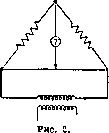
The diagram of the horizontal field of a multiple switchboard: cords, clearing signals, keys, general calling and general clearing signals. This moment applies to multiple switchboards, where multiple telephone operators connect subscribers and, upon the conclusion of the conversation, disconnect them from the called numbers. A distribution operator sits at a distribution board, which has a vertical and a horizontal field. The objects of work are: 1) holes-jacks densely placed on the vertical field with calling lamp-signals on each of them; 2) distribution cords, suspended in holes-cord-contacts on the horizontal field, each equipped with a clearing lamp-signal and a system of multi-colored signals-glancers. At the moment of a call by a subscriber to the station, i.e., their lifting the receiver from the apparatus, a calling lamp lights up above the jack in which their line terminates on the vertical field. The operator immediately inserts the plug of a free cord into the given jack, thereby extending the line of the subscriber who called the station to a free workstation at the multiple switchboard. When choosing a cord—one of the most responsible moments of the labor process—the operator is guided by the indications of the glancers, by the color of which she judges to what extent one or another workstation at the multiple switchboard can at the given moment accept a subscriber for service: cords are marked with a white glancer when they lead to a desk free from work, green—to one currently occupied with servicing one subscriber, red—to one servicing two or more subscribers; a completely extinguished glancer means that the cord leads to a desk where, for some reason, there is no operator at the moment. The operator is obliged to primarily use cords with a white glancer, resorting to cords with a green glancer only when there are no cords with a white one, and to cords with a red signal in the most exceptional cases. At the moment when, upon the conclusion of the conversation, the subscribers place their receivers back, a clearing signal appears on the horizontal field; the operator removes the cord from the jack and returns it to its place. Thus, the work of a distribution operator consists of the continuous insertion of cords into jacks and their removal based on the indications of light signals: calling, clearing, and glancer signals. A multiple switchboard (see figure) also has a vertical and a horizontal field. On the vertical field of each board is located a dense network of jacks, the number of which corresponds to the number of all subscribers on the network; the jacks are designated by subscriber numbers, arranged in a strictly defined order well known to the trained operator. The horizontal field contains all the devices for connecting and disconnecting subscribers: cords, keys, calling and clearing signals. Starting work, the multiple operator puts a microtelephone on her head, consisting of a small telephone receiver attached to a metal elastic headband with a rubber button on the free end, and a microphone with a rotating mouthpiece attached to a breastplate—an aluminum plate lined with fabric. Having put on the apparatus, the operator connects it to the network using the outgoing cord. Upon the appearance of a calling signal at any cord, the operator first of all, by turning the corresponding key, connects her apparatus with the apparatus of the calling subscriber, takes the order (states her number, listens to the called number, repeats it), at the same time searches for the jack of the ordered number, and with her free hand brings the cord plug to its edge; if a characteristic tone ("busy") appears, she informs the calling subscriber of this and returns the cord to its place; if the line is free, she pushes the plug into the jack, and by a second turn of the key gives a ring to the called subscriber, simultaneously informing the caller of this ("ready," "connecting"). Upon the conclusion of the conversation, when both clearing signals of the given cord have appeared, the operator removes the cord from the jack, thereby disconnecting the subscribers. According to data from the Moscow Telephone Station, a multiple operator during peak load hours produces on average 350-360 connections per hour, while a distribution operator, whose cycle of manipulations per connection is significantly shorter than that of a multiple operator, produces 720-750 connections per hour. All work of the operators is conducted under conditions of strictly enforced labor discipline with tireless double control (the main function of a special group of "control" operators and one of the functions of the senior operator). Characteristic of the labor process of operators are: 1) a prolonged forced sitting position; 2) the monotony of a cycle of movements repeated with high frequency; 3) tension of attention, conditioned primarily by the rapid pace of work, measured with second-by-second precision. The degree of tension of attention is significantly influenced by its rapid and frequent fluctuations, which is especially pronounced in the multiple operator in connection with the large number of objects being serviced with the simultaneous participation of two senses—sight and hearing; 4) tension of hearing in the multiple operator; 5) tension of the speech organs in the same (in the distribution operator, on the contrary, there is absolute silence during work—"mute"). The question of the influence of the telephone operator profession on the organs of hearing has been the subject of numerous studies. Blake, who first investigated the influence of the telephone on hearing, believes that telephoning as a profession is harmful to weakened hearing. Gellé and Lannois, having discovered the influence of telephoning mainly in the form of subjective disorders (tinnitus, headache, dizziness, auditory hallucinations, auditory hyperesthesia, weakening of hearing), emphasize that these disorders reflect especially harmfully on a diseased ear: with a normal ear, they disappear quite quickly after getting used to the apparatus and after rest. Politzer and Kartex, in the pathogenesis of this kind of disorder, assign the main place not only to diseased ears but also to the neuropathic state of the operators, which develops under the influence of the intense nature of their work. Braunstein in 1903 examined 157 operators of the Munich Telephone Station with 3 to 8 years of experience and found a satisfactory state of the auditory organs in all of them; 23 operators complained of pricking in the ear, headaches, ear noises, and pains in the auricle after prolonged wearing of the microtelephone. Blegvad, as a result of an examination of 450 telephone operators of the Copenhagen Telephone Station in 1907, comes to the conclusion that professional telephoning in persons with healthy ears does not lead to a weakening of hearing. Treitel points out that excessive use of the telephone sometimes causes strong noise and pricking pains in the ears, and sometimes a peculiar disorder—bilateral doubling of hearing (diplacusia biauricularis). In general, all the old authors, while attributing to prolonged use of the telephone one or another harmful effect on hearing, agree that these effects mainly take place in a diseased ear; a healthy ear adapts to the apparatus to a great extent. A similar conclusion is reached by Trambitsky, who examined Kharkov operators in 1923: he did not find a sharp influence of telephoning on the organ of hearing; he even notes some sharpening of hearing in relation to the ear with which the operator works. According to the data of Solomin, based on a large amount of material from the Moscow Telephone Station, multiple operators show especially high indicators for throat diseases (acute and chronic laryngitis, acute tonsillitis, pharyngitis). Relatively high are also the indicators of ear diseases, mainly in relation to acute otitis, otalgia, and furunculosis and eczema of the external ear. Special emphasis must be placed on electrical contusions of the ear or acoustic traumas, to which long-distance and suburban operators are most exposed. In the majority of cases, however, these traumas do not cause particularly sharp damage to a healthy ear and have a favorable outcome; for an ear affected by some chronic disease, even in the mildest form, an electrical trauma can entail serious consequences (Syrensky and Solomin). Very common among operators are nervous diseases, mainly in the form of functional disorders—neurasthenia and hysteroneurasthenia, as well as neuralgias and neuritis, predominantly of the upper half of the body. Out of 1,410 examined operators of the Moscow Telephone Station, Saparov found functional neuroses in 1,067 (75.5%), among which neurasthenia takes first place (696 people), second—hysteroneurasthenia (305 people); neuralgia and neuritis were found by him in 277 people. The prevalence of nervous diseases among operators is also pointed out by a number of other authors (Saltykovsky, Levontin, Pick, Bernhardt, Blegvad, and others). These diseases in the majority of cases are benign in nature and respond well to treatment, especially with a temporary cessation of work. Operators also show relatively high indicators of blood diseases (anemia, chlorosis), gastrointestinal disorders, women's diseases, especially dysmenorrhea, etc. The increased demands placed by the labor process on the organism of the operator bring to the forefront, as the main basis for the prevention of fatigue and occupational diseases, rational occupational selection—medical and psychotechnical.
Along with this, the most important role is played by: 1) a rational labor regime, the correct alternation of work and rest; at the Moscow telephone exchange, telephone operators have a 1/2-hour break after 2 1/2 hours of work during a 6-hour workday. It is highly advisable here to establish more frequent short breaks, for example, 5–10 minutes after each hour of work; 2) high hygienic standards regarding cubic capacity, ventilation, and lighting, both natural and artificial; 3) rationally designed work seats; 4) rationally designed, comfortably furnished rooms for sleep (for night shifts) and rest. But the most radical solution to the issue is the replacement of manual exchanges with automatic ones (automatic telephone exchanges), which completely eliminate the strenuous labor of telephone operators.
Related articles
Mentioned in
Cite this page
“Telephone Operators.” Soviet Medical Encyclopedia. English translation of Bolshaya Meditsinskaya Entsiklopediya, 1st ed. (Moscow, 1928–1936), ed. N. A. Semashko. https://sovietmedicalencyclopedia.com/article/telephonists/