Paracelsus
Historical document, translated for reference. It reflects medical knowledge of the 1920s–30s and is not medical advice.
Summary
This article profiles Paracelsus (1493–1541), a prominent Renaissance physician and reformer who challenged the traditional medical teachings of Galen and Avicenna. It highlights his contributions to pharmacology, his early work in balneology, and his shift toward chemical explanations of pathology, while noting the mystical elements that persisted in his philosophy.
Encyclopedia article (1928–1936)
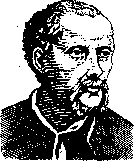
PARACELSUS (real name Theophrastus Bombast von Hohenheim, 1493–1541), one of the greatest physician-reformers of the Renaissance. The son of the physician Wilhelm von Hohenheim, who enjoyed great popularity, Paracelsus studied medicine in Ferrara and other Italian, German, and French universities. He received the title of physician around 1515, and after a series of travels, worked in Salzburg, Strasbourg, and Basel, where he was invited to serve as a city physician and where he delivered lectures. His extreme instability prevented him from settling anywhere, and he wandered throughout his life. Brought to the historical stage by the general flourishing of the sciences, which was conditioned by the growth of merchant capital and the crisis of the natural economy of feudal society, Paracelsus reflected the general tendencies of the era in his works. In opposition to attempts to revive ancient medicine in its inviolable form, Paracelsus subjected the legacy of the Greeks to a critical review, decisively breaking with Galen and Avicenna and beginning a struggle against humoral pathology. Being a chemist by his interests (thanks to which he managed to leave a significant mark on pharmacy through the invention of a number of medicines), he also approached the problems of pathology from the point of view of chemical processes. However, even in this idea, which was progressive for that time, Paracelsus could not free himself from the mystical burden of the centuries and, alongside materialistic concepts, put forward
(admittedly, quite primitive) the doctrine of the archeus—a supreme principle governing all chemical processes in the organism. This reflected his general philosophical views, in which he appeared as a follower of Plato. His interests were extremely versatile; his works concerned not only theoretical questions, but he also developed a number of purely practical tasks, in particular, he worked extensively in the field of the chemistry of medicinal substances; despite the fact that none of the medications he proposed remained in practice, his significance in the history of pharmacy is nevertheless great. His works on syphilis retained their significance until the 19th century. He was one of the early heralds of balneology. One of the greatest merits of Paracelsus was his striving to oppose the scholastic science of the Middle Ages with experience, observation of nature, and experiment. The number of printed works by Paracelsus is extremely large; their complete collection was recently republished in 11 volumes (Paracelsus samtliche Werke, edited by K. Sudhoff and W. Matthiessen, Vol. I–XI, Munich, 1927–28).
Related articles
Mentioned in
- Carbon Dioxide
- Chorea
- Drainage (is used for removing fluids from body cavities,)
- Epilepsy
- Essences
- Hydrogen
- Hypnotism
- Infectious Diseases
- Intestinal Suture
- Mercury
- Opium
- Pharmaceutical Chemistry
- Pharmacognosy
- Pharmacy (PHARMACY, a complex of sciences and knowledge)
- Psychiatry
- Signature
- Spontaneous Generation
- Vitalism
- Vitriol
Cite this page
“Paracelsus.” Soviet Medical Encyclopedia. English translation of Bolshaya Meditsinskaya Entsiklopediya, 1st ed. (Moscow, 1928–1936), ed. N. A. Semashko. https://sovietmedicalencyclopedia.com/article/paracelsus/