Modifications
Historical document, translated for reference. It reflects medical knowledge of the 1920s–30s and is not medical advice.
Summary
This article from the 1928–1936 Great Medical Encyclopedia discusses modifications as non-heritable changes in plant and animal organisms caused by environmental and nutritional factors. It contrasts these transient fluctuations with genetic mutations and briefly mentions persistent modifications and allotropy.
Encyclopedia entry (1928–1936)
MODIFICATIONS, changes in organisms, both plant and animal, caused by various conditions of nutrition and environment. The term modification was first proposed by Nägeli, who pointed out their transient nature. These changes are not inherited, and therefore they must be distinguished from mutations (see), or hereditary changes. The magnitude of the changes is irrelevant when defining the concepts of modification and mutation. Very large organismal changes can be purely transient modifications. In statistical studies, modifications reveal a normal variation curve.
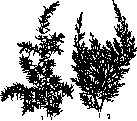
Junipers: 1—common Juniperus communis; 2—savin Juniperus sabina.
A special group is formed by enduring modifications; their peculiarity lies in the fact that, unlike ordinary modifications, they remain constant over many generations. Enduring modifications (see) are of great importance for resolving the question of the inheritance of acquired characteristics and therefore deserve to be separated into a special group. Regarding modification in the physical sense, see Allotropy.
Related articles
Cite this page
“Modifications.” Soviet Medical Encyclopedia. English translation of Bolshaya Meditsinskaya Entsiklopediya, 1st ed. (Moscow, 1928–1936), ed. N. A. Semashko. https://sovietmedicalencyclopedia.com/article/modifications/