Justus von Liebig
Historical document, translated for reference. It reflects medical knowledge of the 1920s–30s and is not medical advice.
Summary
This article provides a biographical overview of the renowned German chemist Justus von Liebig (1803–1873), detailing his contributions to organic chemistry, agricultural science, and physiology. It highlights his establishment of the first scientific chemical laboratory in Germany, his development of analytical methods, and his controversial philosophical views on vitalism.
Encyclopedia article (1928–1936)
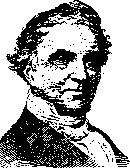
LIEBIG, Justus (Justus v. Liebig, 1803–1873), a famous German chemist. Having received a university education in Bonn and Erlangen, Liebig went to Paris in 1822 for the special study of chemistry, where he worked in the laboratory of Gay-Lussac. Returning to Germany, in 1824 he was appointed extraordinary, and in 1826 ordinary professor of chemistry in Giessen and soon became the head of a school. His talented teaching and the first scientific chemical laboratory in Germany, which he established, attracted scientists from all countries, and many famous chemists of the 19th century emerged from his school. In 1852, Liebig moved to Munich, where he was president of the Academy and a professor at the university. In 1832, he founded "Annalen d. Chemie u. Pharmacie" (Heidelberg). From 1837, Liebig, with Wöhler and Poggendorff, published "Handwörterbuch d. reinen u. angewandten Chemie" (Vol. I–IX, Braunschweig, 1837–64), and after the death of Berzelius, he continued his "Jahresberichte."
Liebig's works touch upon all branches of chemistry. His research in the field of organic chemistry is most important. His discovery in 1823 of the identity of the composition of silver salts of fulminic and cyanic acids was of extremely great importance in the history of chemistry, as it served as the basis for establishing the concept of isomerism. In 1832, Liebig and Wöhler published a famous work on oil of bitter almonds, in which they showed that all compounds obtained from this substance could be grouped around the hypothetical benzoyl radical. The name of Liebig is closely connected with the theory of complex radicals—a theory which, although it proved untenable, nevertheless prompted a number of most important works. Having conducted research on the structure of ether, alcohol, and their derivatives, Liebig put forward the ethyl theory, according to which these substances are compounds of the ethyl radical, in contrast to the view of Dumas, who considered them hydrates of ethylene. Liebig obtained a number of derivatives of cyanogen, chloral, chloral hydrate, and chloroform. The joint work of Liebig and Dumas on the structure of organic acids extended Graham's doctrine of the polybasicity of acids to organic acids. In the field of methodology and apparatus, one must mention the condenser he invented, the improvement of the apparatus for the combustion of organic compounds (Liebig furnace), and the improvement of the method of organic analysis. He is responsible for the development of the method for determining carbon and hydrogen, the determination of alkaloids, and the determination of the molecular weight of organic bases by means of their chloroplatinates. In the field of inorganic chemistry, it is important to note the studies of compounds of antimony, aluminum, and silicon, the method of separating nickel from cobalt, the method of determining oxygen using pyrogallol, and the analysis of mineral waters. In the later years of his life, Liebig devoted his main attention to the chemistry of animal and plant processes. He discovered hippuric acid in urine, inosinic acid, and tyrosine as a product of the decomposition of casein; he performed an analysis of meat juice and established the structure of creatine, creatinine, and sarcosine. He classified various food substances and explained the importance of the method of food preparation. He is responsible for the preparation of infant milk soup and meat extract. Liebig's "Chemical Letters" and his works on the question of the metabolism and energy in the organism were of great importance. Liebig was interested in plant processes in connection with the improvement of agriculture. The new ideas expressed by Liebig gained enormous practical significance. Believing that in the cultivation of plants the soil cannot provide mineral substances indefinitely, he proposed replenishing the reserves of these substances in the soil by means of artificial fertilizers.
His research on superphosphates is widely known. In practical agronomy, in the early period of its development, the law of the minimum established by Liebig played a major role, which states that the productivity of plants is determined by the factor (substance) that is in the minimum in the soil; only by acting on this factor can the yield be increased. On the question of the nature of alcoholic fermentation, the controversy between Liebig and Pasteur was of great importance. Throughout his scientific activity, Liebig placed particularly high value on data obtained from experimental work, demanding facts (deeds), and not verbal explanations or casuistic analysis of scientific propositions that were unclear from a factual point of view. This point of view, defended by Liebig in chemical research, does not agree with his philosophical views, which found their expression in individual articles, for example, in "Chemical Letters." Liebig admits the possibility of the initial existence of life, of life being brought to Earth from outer space; he also recognizes a vital force as a form-building principle acting within and through physical forces. Liebig's vitalism is rather vague, and his reasoning about the possibility of life being brought to Earth from outer space is weakly substantiated by him. The discrepancy between the sobriety, practicality, and depth that Liebig displays when analyzing the experimental material he obtained, and the weakness of his philosophical positions (some of which were called by Engels the most mind-boggling of possible assumptions), is apparently explained by Liebig's little interest in philosophical questions and insufficient familiarity with areas of natural science adjacent to chemistry. The most important works of Liebig, published in separate editions: "Anleitung zur Analyse organischer Körper" (Braunschweig, 1837); "Die Chemie in ihrer Anwendung auf Agrikultur und Physiologie" (Braunschweig, 1840); "Die Tierchemie oder die organische Chemie in ihrer Anwendung auf Physiologie und Pathologie" (Braunschweig, 1842); "Handbuch der organischen Chemie mit Rücksicht auf Pharmacie" (Heidelberg, 1843); "Chemische Briefe" (Heidelberg, 1844); "Chemische Untersuchungen über das Fleisch und seine Zubereitung zum Nahrungsmittel" (Heidelberg, 1847); "Über einige Ursachen der Säftebewegung im tierischen Organismus" (Braunschweig, 1848); "Über Theorie und Praxis in d. Landwirtschaft" (Braunschweig, 1856); "Induction und Deduktion" (München, 1865); "Suppe für Säuglinge" (Braunschweig, 1877). Most of Liebig's books have been translated into Russian. Lit.: Menshutkin N., Essay on the Development of Chemical Views, SPB, 1888; Sharvin V., Justus Liebig, Moscow, 1925; Engels F., Dialectics of Nature (Archives of K. Marx and F. Engels, book 2, M.-L., 1825); Bischoff Th., Über den Einfluss v. Liebig auf die Entwicklung der Physiologie, München, 1874; Erlenmeyer E., Über den Einfluss v. Liebig auf die Entwicklung der reinen Chemie, München, 1874; Kohut, Justus v. Liebig, Giessen, 1904; Munk J., Justus v. Liebig, Deutsche med. Wochenschr., 1903, No. 20; Schlossmann A., Justus v. Liebig, Münch. med. Wchnschr., 1903, No. 91.
Related articles
Cite this page
“Justus von Liebig.” Soviet Medical Encyclopedia. English translation of Bolshaya Meditsinskaya Entsiklopediya, 1st ed. (Moscow, 1928–1936), ed. N. A. Semashko. https://sovietmedicalencyclopedia.com/article/liebig/