Levit
Historical document, translated for reference. It reflects medical knowledge of the 1920s–30s and is not medical advice.
Summary
This entry provides biographical sketches of two Soviet medical figures: the surgeon Vladimir Semyonovich Levit and the physician and geneticist Solomon Grigoryevich Levit. It details their academic backgrounds, clinical contributions, and public activities during the early Soviet period.
Encyclopedia article (1928–1936)
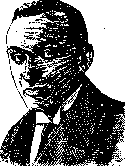
LEVIT Vladimir Semyonovich (born 1883), a prominent surgeon. In 1901, he entered the medical faculty of the University of Königsberg (Germany), from which he graduated in 1906; he presented a graduation thesis, written under the guidance of Beneke, on pancreatic necrosis caused by experimental ischemia. Levit began his medical practice as a traveling Zemstvo doctor for the Ardatov Zemstvo. In 1908, he worked in the surgical department of the Smolensk hospital under S. I. Spasokukotsky. At the end of 1908, he was invited to the position of surgeon at the Ardatov hospital and worked there until 1914. During his work in the Zemstvo, he repeatedly took advantage of long-term scientific trips abroad. In 1914, Levit defended his dissertation. In 1914, he was elected head of the surgical department of the Simbirsk provincial hospital. In 1919, he was elected a resident of the faculty surgical clinic of Tomsk University (Mysch) and in the same year a private docent of this clinic. At the same time, for 2 years, Levit worked on histology with Chasovnikov and wrote a paper on the significance of the so-called mucous cells of the pepsin glands of the stomach of mammals. In 1922, he was elected professor of the faculty surgical clinic of Irkutsk University, and in 1926, professor of the hospital surgical clinic of the 2nd Moscow State University.
During his medical and academic career, Levit wrote more than 50 works of a clinical, experimental, and histological nature, devoted to various branches of surgery and published for the most part in various Russian and German journals. The questions of stomach surgery occupy the largest place. In particular, it is necessary to note the works of Levit on the surgery of the cardiac part of the stomach, and he was the first in the USSR to successfully perform a resection of the cardiac part of the stomach for cancer, and also developed a two-stage method for this operation. A significant place in Levit's works is occupied by diseases of the autonomic nervous system and their surgical treatment. Levit experimentally and clinically refuted the theory of Fischer, who recommended removing the adrenal glands for epilepsy. Under the guidance of Levit, a number of works on goiter in the Baikal region were conducted. It is necessary to emphasize that a significant part of the works (14) was written by Levit under the conditions of Zemstvo work in the absence of a laboratory, relevant literary sources, etc., which, however, did not prevent him from successfully engaging in the development of a number of serious surgical questions. Of the works of Levit published as separate editions, it is necessary to note: "On the question of stomach cancer and palliative operations for it" (dissertation, Kazan, 1914); "On goiter in the Baikal region" (Irkutsk, 1925); "On the study of basal metabolism using the Krogh apparatus" (Irkutsk, 1926). Levit's active public activity deserves attention. In 1924–26, Levit was dean of the medical faculty of Irkutsk University, in 1928–29, deputy dean of the medical faculty of the 2nd Moscow State University; at the present time, he is a professor at the 2nd Moscow State University, a member of the editorial board of the journals "Novaya Khirurgiya" (New Surgery), "Tsentralny Meditsinsky Zhurnal" (Central Medical Journal), "Russkaya Klinika" (Russian Clinic), editor of the surgical section of the Great Medical Encyclopedia, and other publications.
LEVIT Solomon Grigoryevich (born 1894), physician. In 1921, he graduated from the medical faculty of the 1st Moscow State University, after which until 1929 he served as a resident, and then as an assistant at the hospital therapy clinic of the same university. In 1925, he was on a trip abroad, where he studied physical and colloid chemistry in the laboratory of Rona. In 1928, he organized a cabinet for human heredity and constitution [subsequently the genetic department at the Medico-Biological Institute, of which he has been the head until now (1930)]. In 1929, he left his work at the clinic and switched entirely to work on genetics and theoretical pathology. In 1922–25, he carried out leadership work in the board of the 1st Moscow State University, in 1926–30 in the section of natural and exact sciences of the Communist Academy, and from 1930 Levit has been the director of the Medico-Biological Institute. He actively participated in the organization of circles (subsequently societies) of materialist physicians (1924) and materialist biologists (1926), serving as chairman in the former (until 1930) and deputy chairman in the latter. He was a member of the "Bund" in 1913–20, and from 1920 a member of the All-Union Communist Party (Bolsheviks). He participates in the editing of many publications (Great Soviet Encyclopedia, Great Medical Encyclopedia, the journal "Estestvoznanie i Marksizm" (Natural Science and Marxism), etc.). Main works: "Hemorrhagic Diatheses" (Moscow, 1929); "Untersuchungen über Treppenallelomorphismus" (Archiv für Entwicklungsmechanik, Vol. CXXII, 1930); a number of works on human genetics ("Mediko-biologichesky Zhurnal", 1929–30). He wrote a series of articles on the methodology of biology and medicine.
Related articles
Mentioned in
Cite this page
“Levit.” Soviet Medical Encyclopedia. English translation of Bolshaya Meditsinskaya Entsiklopediya, 1st ed. (Moscow, 1928–1936), ed. N. A. Semashko. https://sovietmedicalencyclopedia.com/article/levit/