Constantin Levaditi
Historical document, translated for reference. It reflects medical knowledge of the 1920s–30s and is not medical advice.
Summary
A biographical entry on Constantin Levaditi (1874–1953), a prominent French microbiologist and biochemist of Romanian origin. He is celebrated for his pioneering work on the staining and cultivation of Spirochaeta pallida, the introduction of bismuth therapy for syphilis, and his extensive research on neurotropic viruses, including polio and encephalitis.
Encyclopedia article (1928–1936)
LEVADITI Constantin (Constantin Levaditi, born in 1874), well-known French microbiologist and biochemist, professor at the Pasteur Institute in Paris, member of the French Academy of Medicine (since 1928). Born in Galați (Romania), he later naturalized in France, graduating from the Faculty of Medicine in Bucharest, and then from the Faculty of Medicine in Paris (1902).
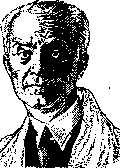
Since 1901, he has been working at the Pasteur Institute, where he currently heads a department. He was a student of Ehrlich and Metchnikoff. Levaditi's highly numerous and diverse works relate predominantly to the study of spirochetes and spirocheticidal substances. In 1905, Levaditi established the presence of the pale spirochete (Spirochaeta pallida) in the vesicles of pemphigus (pemphigus syphiliticus neonatorum) and in the internal organs of children with congenital syphilis. Subsequently, he studied in detail the presence of spirochetes in the internal organs, particularly in the liver, and was the first to obtain (though not pure) a culture of spirochetes in collodion sacs placed in the abdominal cavity of monkeys. Based on the method of Bertarelli and Volpino, Levaditi proposed a method for staining the spirochete by impregnation with silver nitrate (a method that is now considered classic). At the same time, he studied the mode of penetration of spirochetes into the organism and proved their presence in tissues affected by the syphilitic process. With these works, Levaditi definitively confirmed the etiological role of Schaudinn's spirochete in syphilis. After this, Levaditi demonstrated the presence of spirochetes in the placenta and ovaries, as well as in the umbilical cord of newborn children. Levaditi also studied the incubation of syphilis and proved the diversity of spirochete forms, which differ in their degree of virulence. Levaditi was the first to propose using a liver, even one not containing spirochetes, as an antigen in the Wassermann reaction, and proved the non-specificity of the antigen from the liver of congenital syphilitics. Levaditi asserted that the specificity of the Wassermann reaction in syphilis depends not on the specificity of the antigen, but on the presence of various substances in a colloidal state in the patient's serum and cerebrospinal fluid. In the presence of bile salts and liver lipoids, these substances precipitate and cause complement fixation. Levaditi showed that strains of spirochetes can develop that are resistant to mercury preparations, which explains the failure of mercury treatment in some cases. In 1921, together with Sazerac, Levaditi proposed a new antisyphilitic agent—tartrate salts of bismuth and sodium or potassium (sodium tartrobismuthate). Subsequently, he also demonstrated the therapeutic effect in syphilis of carbolic (phenolic) derivatives of bismuth and pure metallic bismuth. From the study of bismuth in syphilis, Levaditi moved on to the study of other metals and demonstrated the action of vanadium, gold, platinum, and tellurium. Levaditi's works on the study of poliomyelitis are very important. He was the first to successfully inoculate monkeys with the virus of this disease, prove its specificity, and study the pathological-anatomical changes in poliomyelitis.
Levaditi has done a series of very important works in the field of studying neurotropic viruses of poliomyelitis, lethargic encephalitis, herpes, and vaccinia, as well as rabies virus and post-vaccinal encephalitis. Together with R. Kraus, Levaditi is the editor and one of the authors of the monumental "Handbuch der Technik u. Methodik der Immunitätsforschung" (Vols. I–II and Supplementary Volume, Jena, 1908–11). In total, Levaditi has published over 360 works; a significant portion of them in collaboration with other authors. Of the works published as separate editions, the most important are: "La nutrition dans ses rapports avec l'immunité" (Paris, 1904); "La syphilis" (jointly with J. Roche, Paris, 1909); "Ectodermoses neurotropes" (Paris, 1922); "Le bismuth dans le traitement de la syphilis" (Paris, 1924); "L'herpès et le zona" (Paris, 1926). A vast number of Levaditi's works have been published in the Annales de l'Institut Pasteur, Comptes rendus des séances de la Société de biologie, Comptes rendus de l'Académie des Sciences, and Bulletin de la Société Française de dermatologie et de syphiligraphie.
Related articles
Cite this page
“Constantin Levaditi.” Soviet Medical Encyclopedia. English translation of Bolshaya Meditsinskaya Entsiklopediya, 1st ed. (Moscow, 1928–1936), ed. N. A. Semashko. https://sovietmedicalencyclopedia.com/article/levaditi/