Intermediate; Promitosis
Historical document, translated for reference. It reflects medical knowledge of the 1920s–30s and is not medical advice.
Summary
This 1930s encyclopedia entry defines the term 'intermediate' in the context of the brain and describes 'promitosis,' a primitive form of indirect cell division observed in protozoa. It details the historical understanding of promitosis, where cell centers are enclosed within the nucleus, and discusses various types of this division process.
Encyclopedia article (1928–1936)
INTERMEDIATE. BRAIN, see Diencephalon. PROMITOSIS, a primitive form of indirect division (karyokinesis), described for a significant number of protozoa. In its original sense, under Promitosis, according to the suggestion of Naegler, it was understood as a simplified mitosis, in which the cell centers (centrosomes) are enclosed within the nucleus (e.g., in some radiolarians, Ceritropyxis, and others).
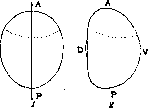
Subsequently, this term began to be interpreted more broadly in the sense indicated above. Several types of Promitosis can be distinguished. Thus, for a number of protozoa, a process has been described in which the central mass of chromatin (karyosome) divides by constriction into two and moves to the poles, replacing the centrosphere, while the peripheral chromatin breaks down into a certain number of segments, apparently corresponding to the chromosomes of normal mitosis. Finally, for the last type of Promitosis, which we encounter in a number of protozoa (e.g., amoebae), peculiar deviations in the number, appearance, and behavior of the parts of the chromosomal apparatus are characteristic.
Related articles
Cite this page
“Intermediate; Promitosis.” Soviet Medical Encyclopedia. English translation of Bolshaya Meditsinskaya Entsiklopediya, 1st ed. (Moscow, 1928–1936), ed. N. A. Semashko. https://sovietmedicalencyclopedia.com/article/intermediate/