Growth
Historical document, translated for reference. It reflects medical knowledge of the 1920s–30s and is not medical advice.
Summary
This article defines growth as the increase in the size of a developing organism, primarily through the multiplication of active cellular mass. It discusses the mathematical laws governing growth, the methodology for measuring it, and the theoretical models used to interpret growth curves in biological organisms.
Encyclopedia article (1928–1936)
GROWTH means an increase in the dimensions of a developing organism. In typical cases, growth is associated with an increase in mass; however, not every increase in an organism's mass is designated as growth (for example, fat deposition, the accumulation of reproductive products in certain animals, or pregnancy may be associated with a significant increase in volume). During growth, there occurs primarily an increase in the mass of the active parts of the organism (the living "substance") due to the growth and multiplication of cells and their equivalents. Such growth is characteristic precisely of a developing organism, although it is far from always ceasing with the attainment of maturity. Since, however, the growth of a mature organism is never proportional, it is also associated here with a change in form, i.e., with developmental processes. Since the less differentiated cellular elements of a growing organism divide upon doubling their volume, and as a result of this division the initial ratios of surface area to volume, which are important for metabolism, are restored, this creates the possibility for their unlimited growth and multiplication, provided, of course, there are optimal environmental conditions associated with an unlimited influx of the necessary nutrients, salts, water, and oxygen. The reproduction of bacteria and other lower organisms in a suitable medium occurs at a constant rate for an unlimited time. The same applies to the growth of tissues of higher animals outside the organism (in tissue cultures). Consequently, the growth of the active parts of the organism could, in itself, proceed for an unlimited time and at a constant rate under constant conditions. The result of such growth at a constant rate would be an increase in mass in a geometric progression, determined by the mathematical law of organic growth (v=v0ect, where v0 is the initial growth, t is time, e is the base of natural logarithms, and c is a constant); in reality, organisms do not grow this way—the rate of their growth continuously falls, and growth sooner or later reaches a certain limit. The limitation of the individual growth of organisms to certain limits is not the result of the exhaustion of some "growth energy," but the result of complex interactions regulating the morphogenesis and growth of the organism as a whole. Various attempts have been made to formulate the laws of organismal growth. To approach them more closely, one must first give a more precise definition to certain concepts and pay attention to research methodology. To account for the growth of organisms, various kinds of measurements are performed—weight, volumetric, surface, and linear. Since linear growth is different in different directions, more precise data for general accounting could be provided by measurements of surface area and, in particular, measurements of volume, were it not for the significant technical difficulties standing in the way of such measurements. Therefore, in practice, the most accurate results are provided by weight determinations. The source of error in this case is, besides the consumption and deposition of reserve substances, also the deposition of substances with a greater or lesser specific gravity (lime). On the basis of the obtained numerical data, one determines the "absolute rate" of growth, i.e., the magnitude of the increase of the entire organism (weight, length, etc.) per unit of time, and the "relative" or "specific" rate of growth, i.e., the magnitude of the increase per weight, linear, etc., unit per unit of time. The latter value is usually expressed as a percentage. Since the rate of growth is a variable value, it is completely impermissible to move from one unit of time to another by way of arithmetic conversion (i.e., on the basis of empirical data obtained, for example, as a result of weekly measurements, to determine by simple division the magnitude of the weekly increase by seven, or by multiplication, the daily or monthly increase). In the same way, the usual arithmetic determination of the magnitude of percentage increase yields completely incorrect and mutually incomparable results. The specific rate of growth must be calculated on the basis of numerical material collected as systematically as possible, at regular, not too large intervals of time, exclusively according to the following formula (determined by the law of organic growth and proposed simultaneously by S. Brody and I. Schmalhausen): C = (log M2 - log M1) / (t2 - t1) * 2.3026, where log y is the common decimal logarithm of the value found at time t. With systematically (weekly, annually, etc.) collected material, t2-t1 equals one, and the division of the difference of the logarithms by the modulus (0.4343) is performed very quickly with the help of a small auxiliary table. The numerical material obtained by measurements can be subjected to mathematical analysis. For preliminary orientation, however, the graphic method is the simplest and at the same time the most illustrative. Usually, based on empirical data, one draws, first of all, a growth curve in a system of rectangular coordinates. On the abscissa, one marks the age of the organism, if possible from the beginning of embryonic development or from birth, and on the ordinates, one marks with points the dimensions of the organism (weight, length, etc.). In the same way, one constructs the curve of increase ("absolute rate" of growth) and the curve of the specific rate of growth. In many cases, the obtained curves have a characteristic, clearly lawful form. The growth curve, initially gentle, then rises ever more steeply until a certain turning point, when it again becomes gentler and, by the end of growth, lies parallel to the abscissa axis. Thus, the growth curve usually has a characteristic S-shaped bend. The general similarity of this curve to curves expressing the course of certain chemical reactions (W. Ostwald) led some researchers (T. Robertson, S. Brody) to theoretical concepts that significantly simplify the very complex picture of the growth of an animal organism. T. Robertson, developing the views of J. Loeb, believes that at the basis of growth processes lies some guiding autocatalytic monomolecular reaction. The similarity of the organism's growth curve to the "logistic" curve of population growth, constructed by the Belgian statistician Verhulst, leads the majority of authors (in recent times especially R. Pearl and his school) to accept a substantial analogy between the growth of an organism and the growth of a free population. A deeper analysis, however, reveals the superficiality of these analogies and the significant uniqueness of the process of individual growth of organisms, which, moreover, cannot be fully reduced to one and the same type. The curve of increase ("absolute rate" of growth) rises gradually at first, then faster, reaches a certain maximum, and then also regularly falls. This circumstance was paid special attention to by the botanist J. Sachs, who thus characterized the "grand period of growth," which also lies at the basis of the newer constructions of G. Backman. The curve of the specific rate of growth has, for the most part, the shape of a curve that is initially very steep and then falls ever more gently (resembling an equilateral hyperbola). The continuous fall in the rate of growth as an expression of the age-related changes of the organism is especially regular in vertebrate animals. This regularity served as a starting point for the conclusions of E. Mehnert and for the well-known theoretical constructions of C. Minot, to which I. Schmalhausen has also adhered in recent times. The mathematical interpretation of empirical data depends to a significant degree on the theoretical views of the author. Any growth curve can either be expressed by a more or less complex power (exponential) formula or interpreted as a parabola with a greater or lesser number of parameters. If the entire curve does not fit into the framework of a single formula, it is broken down into separate periods or "cycles" of growth, to which an independent mathematical characteristic is then given. There is no doubt that the growth of organisms rests on processes of an exponential character. This, however, does not at all mean that at its basis lies some guiding autocatalytic reaction (T. Robertson). The exponential character of growth is only an expression of the growth of living organisms with their entire mass, since the magnitude of the increase at any given moment is proportional to the mass of growing tissues present. At the same time, however, with few exceptions (insect larvae), the mass of the organism does not increase in a geometric progression. If the magnitude of the absolute increase does increase up to a certain age, the specific rate of growth falls continuously. T. Robertson's formula undoubtedly does not capture the regularity of this fall (especially in the embryonic period). From the theoretical side, the most interesting is the attempt by Janisch to find a quantitative expression for various biological processes, including growth, in chain formulas that reflect the unity and inseparability of opposite processes in the organism. However, even here, the complexity and underdevelopment of these formulas are a significant obstacle to their practical application. On the other hand, potential formulas of the parabola type have great advantages: y = a + bt + ct2 + dt3 + ... + mtn. On one hand, with the introduction of a sufficient number of parameters, they allow for no less an approximation to the empirical curve than exponential formulas; on the other hand, formulas of this type can also receive sufficient theoretical justification.
Practically, a simplified formula v=mtk (where m and k are constants), simultaneously proposed for the characterization of embryonic growth by H. Murray, E. MacDowell, and I. Schmalhausen, acquires special significance. Although this formula assumes unlimited growth, growth is continuously slowing down. In many organisms, we indeed observe, albeit slowed, growth until deep old age (animals with continuous growth); in those cases where the visible growth of a mature organism ceases, as in many highly differentiated animals (especially in insects, birds, and mammals), the sharp intervention of new growth-regulating factors is clearly evident, the action of which cannot be fully included in any mathematical formulas. Although the indicated formula, which perfectly expresses the embryonic growth of a higher vertebrate, cannot thus cover the entire growth of an organism as a whole, it is hardly possible to do so with the help of any other formula. The simplified formula of parabolic growth quite satisfactorily expresses the basic regularities of growth within individual natural periods and at the same time provides a means for convenient analysis of the entire process as a whole. The specific growth rate during the embryonic period, as well as within natural post-embryonic periods (lactation, childhood until the onset of puberty, the period of puberty, maturity), falls inversely proportional to the age, counted from the beginning of the growth of the embryonic body primordium: C = -% - = y. The constant K characterizes the intensity of growth of a given organism (in a given natural period) regardless of the size and age of the organism, which allows for very broad comparisons. The growth constant K maintains its constancy under constant conditions, and thus the determination of this value at specific intervals allows one to judge changes in external and internal growth factors. The calculation of this value, carried out according to the formula K = ^-jT-^iUt > where u-dimensions of the organism at age t, counted from the beginning of embryonic growth, can be performed on large material with great accuracy and taking into account the mean and probable error of its mean value for a known period. The practical value of the formula is determined by the possibility of simply and accurately characterizing growth and obtaining comparable results for different organisms. The formula of parabolic growth can also have a theoretical justification. It most clearly expresses the age-related nature of changes in the growth rate of an organism. Assuming, together with Minot, that the decline in the growth rate of an organism is determined by the gradual differentiation of its tissues, we can note the regularity of the latter's course. If only indifferent protoplasm assimilates, and the products of differentiation are only the result of the transformation of the latter, then parabolic growth is the inevitable result of the exponential increase (at a constant specific rate) of indifferent masses with a constant rate of their hist. differentiation (accompanied by the cessation of independent growth). Thus, we naturally move from a purely exponential process, which, as stated, lies at the basis of organic growth, to the actually observed, continuously fading growth of higher organisms. A deep connection between growth intensity and the degree of differentiation is also revealed in the different growth rates of various organs. The most differentiated organs (especially the brain) always grow slower than others, and this is the reason why proportional growth of parts is not observed in a differentiated organism. The analysis of growth, performed by the method of determining the constant of parabolic growth, reveals relatively simple relationships in lower vertebrates (at least two natural periods: embryonic and post-embryonic). In higher vertebrates, the entire process is divided into at least 3-4 periods, differing in the value of the constant, which as a rule falls sharply during the transition from one period to the next. The constant of embryonic increase in volume or weight in most birds and mammals is slightly above 3, approaching 4 in large forms. The constant of increase in linear dimensions is approximately 3 times smaller. During the lactation period, the value of the constant can still be relatively high. Upon transition to ordinary food, it falls noticeably lower. The onset of puberty is also usually associated with a fall in the value of the constant. The final cessation of growth, regulated by the endocrine apparatus, is associated with a sharp fall of the growth constant to zero. In humans, the constant of embryonic growth is close to 4, but in the last month of intrauterine life and during the first year (lactation) K=1.3, in childhood up to 11-12 years K=0.6-0.7, during the period of puberty the constant rises again to K = 1.4-1.6 (later in boys, but higher), then at the age of 18-19 it falls again to 0.6, at which level it remains (with fluctuations) until the cessation of growth at the age of 21-23 years. These changes clearly indicate the existence of factors that change during different periods of the life of an organism. Birth is associated with a sudden change in all conditions of the organism's existence, but significant changes are also introduced in later periods of life with the transition to different food, with the complication of conditions of existence, and especially with changes in the endocrine apparatus, which to a significant extent plays the role of a growth regulator (especially the pituitary gland). Thus, we naturally move from a purely exponential process, which, as stated, lies at the basis of organic growth, to the actually observed, continuously fading growth of higher organisms. A deep connection between growth intensity and the degree of differentiation is also revealed in the different growth rates of various organs. The most differentiated organs (especially the brain) always grow slower than others, and this is the reason why proportional growth of parts is not observed in a differentiated organism. The analysis of growth, performed by the method of determining the constant of parabolic growth, reveals relatively simple relationships in lower vertebrates (at least two natural periods: embryonic and post-embryonic). In higher vertebrates, the entire process is divided into at least 3-4 periods, differing in the value of the constant, which as a rule falls sharply during the transition from one period to the next. The constant of embryonic increase in volume or weight in most birds and mammals is slightly above 3, approaching 4 in large forms. The constant of increase in linear dimensions is approximately 3 times smaller. During the lactation period, the value of the constant can still be relatively high. Upon transition to ordinary food, it falls noticeably lower. The onset of puberty is also usually associated with a fall in the value of the constant. The final cessation of growth, regulated by the endocrine apparatus, is associated with a sharp fall of the growth constant to zero. In humans, the constant of embryonic growth is close to 4, but in the last month of intrauterine life and during the first year (lactation) K=1.3, in childhood up to 11-12 years K=0.6-0.7, during the period of puberty the constant rises again to K = 1.4-1.6 (later in boys, but higher), then at the age of 18-19 it falls again to 0.6, at which level it remains (with fluctuations) until the cessation of growth at the age of 21-23 years. These changes clearly indicate the existence of factors that change during different periods of the life of an organism. Birth is associated with a sudden change in all conditions of the organism's existence, but significant changes are also introduced in later periods of life with the transition to different food, with the complication of conditions of existence, and especially with changes in the endocrine apparatus, which to a significant extent plays the role of a growth regulator (especially the pituitary gland). Thus, the process of growth, and consequently its result—the final dimensions of the body—are determined by many values: the initial mass of the embryonic body primordium (M), the intensity of embryonic growth (K) and its duration, as well as the intensity of growth and the duration of individual periods of post-embryonic growth. All these values are in turn conditioned by very many factors interacting in the developing organism. A picture of very complex relationships is revealed, and therefore all attempts to characterize the entire growth process as a whole mathematically are doomed to failure in advance. We must be satisfied with the possibility of accurately revealing only the general regularities of growth, which give us the opportunity to analyze this complex process in specific cases, to reveal individual dependencies, so that then, if necessary, we are able to exert a certain influence on its course. I. Schmalhausen. Physiology of growth.
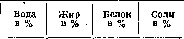
Chemical and physico-chemical changes of the growing organism have been studied repeatedly. This includes the data of Schaffer and Bialaszewicz on the change in the osmotic properties of the growing amphibian embryo and the data of Schaffer on the water content at different stages of embryo development. Changes in the chemical composition of the growing human organism have been investigated by a number of authors; based on their data, the attached table has been compiled, borrowed from the summary by H. Aron 'Biochemistry of Growth' (1913) (Table 1 on page 347). Corresponding data for the growth of rabbits are presented in Table 2 (data of Fehling, Shkarin, and Friedenthal). From the presented data, it is evident that the percentage content of water in the process of growth progressively decreases: in the embryonic period in humans from 97% to 75%, by the age of one month to 70%, and in adults it reaches 65%. The content of fat, protein, and salts, on the contrary, increases. The change in the mineral composition of the growing human organism, starting from 3 months Table 1. Author Age in months Weight in g, Fehling. . Michel . Fehling. . Michel . Fehling. . Fehling. . Brubacher Fehling . . Brubacher
The content of water, fat, protein, and salts in the fetus from 15 to 30 days, from birth to 1 month, and in adults is as follows: Water in %: 91.5–79.4 (fetus), 77.8–71.2 (newborn), 64.70 (adults); Fat in %: 2.12–4.90 (fetus), 8.5–12.6 (newborn), 14.83 (adults); Protein (N × 6.25) in %: 7.78 (fetus), 13.63–14.19 (newborn), 14.83 (adults); Salts in %: 1.56–2.18 (fetus), 2.41–1.74 (newborn). The figures from–to show the water content, etc., at extreme points of the studied period. The development of the fetus before birth was traced by Michel, Giacosa, and others. From their data, Table 3 was compiled. Table 3. Age: From 3 to 19 months. Mineral substances: Cl, P2O5. The content of phosphorus and calcium undoubtedly increases at the expense of bone substance, while the content of other elements of the mineral composition either slightly decreases (Cl, Na2O) or remains practically unchanged (Fe2O3, SO3, MgO, K2O). Regarding external conditions for growth, it is necessary to keep in mind food, specifically its quantity and qualitative composition. Starvation or quantitatively insufficient nutrition leads to the inhibition of growth. A lack of certain amino acids, for example, tryptophan, tyrosine, and cystine, has a particularly sharp effect on growth. In experiments with a casein diet in rats, it was shown that with 18% casein content in the diet, growth proceeds normally, whereas at 9% there is a delay. At the same time, if the amount of cystine contained in the missing 9% of casein is added to the 9% casein content, the growth rate returns to normal. Recently, mainly through the work of Hammett, the very great importance of sulfhydryl compounds, in particular glutathione, for cell reproduction has been shown. It is possible that cystine and other amino acids are necessary for growth precisely as constituent parts participating in the synthesis of glutathione in the organism. An increased content of reduced glutathione in tissues experiencing intense growth (regenerating tissues) has been shown recently by Orekhovich and Bromley. Acceleration of growth (up to 60%) was obtained with oral administration and injections of lecithin (Hatai, Kronheim). When studying the growth of tissues in culture in vitro, Carrel and Ebeling showed the necessity of special substances—trephones—which appear during autolysis, during cell division. Trephones are contained in leukocytes, which apparently explains the progressive phenomena in wounds as a result of the infiltration of surrounding tissues by white blood cell elements. In addition to trephones, for tissue growth, it seems necessary to have desmones—substances discovered by Fischer—which, unlike trephones, possess species and tissue specificity. Among food elements, vitamins are undoubtedly of particular importance for growth. Among vitamins, vitamin A is of the utmost importance for growth. Of the agents of the environment, temperature and light exert an influence on growth. The influence of temperature obeys an exponential law, i.e., an increase in temperature up to a certain limit has a stimulating effect, while a further increase can lead to the inhibition of growth. Visible light essentially has an inhibitory effect on the growth of plants in length, as evidenced by the excessively long shoots of plants grown in the dark. Light also inhibits the formation of potato tubers, in which one can induce the formation of tubers on the aerial part of the stem by shading it. Ultraviolet rays are in a special position; ultraviolet rays of a certain wavelength in an appropriate dose accelerate growth by stimulating cell division, and perhaps also the metabolism of growing tissue (see Mitogenetic rays). Certain parts of the organism turn out to be regulators of growth processes. Here it is necessary to note the nervous system and glands of internal secretion. M. Aron, in experiments on tadpoles, showed the presence of apparently two growth centers located in the central nervous system. Experiments on cutting the spinal cord and grafting parts of embryos make Aron's position quite plausible. Experiments on the denervation of a limb bud (Hamburger) show a delay in growth in the limb deprived of normal innervation. Regarding the question of the influence of glands of internal secretion on growth, there is a great deal of data. Removal of the thyroid gland leads to a noticeable inhibition of growth in sheep, goats, and pigs, which is evident from the experiments of Eiselsberg, Vincent, and Jolly, as well as rabbits (Hofmeister). In thyroidectomized animals, the bones remain short, their shape is irregular, and the ossification of the skeleton is delayed. Similar phenomena occur in children with thyroid insufficiency. Administration of a thyroid preparation leads to the stimulation of growth in such subjects. The influence of the pituitary gland (see) on growth is even more distinct. The significance of the thymus gland (see) is less studied. The activity of the thyroid and sex glands is connected with certain phenomena of differential growth. Thus, the sex glands exert an influence on the development of sex characteristics in vertebrates. The thyroid gland is related to the metamorphosis of amphibians, during which part of the organs grows intensively (legs, tongue, lungs), and part undergoes regression (gills, tail). Champy explained the stimulating effect of the thyroid hormone on the growth of a number of organs during metamorphosis by the selective sensitivity of certain regions to the thyroid hormone. One can, however, think that the thyroid hormone should rather stimulate resorption processes. These latter, in turn, can exert a stimulating influence on the growth of other parts of the organism by chemical (sulfhydryl compounds, trephones, desmones) and physical (mitogenetic rays) means. A similar concept can be created for regenerative and blastomatous growth, since in both the regenerate and malignant tumors one has to deal with a process of intensely proceeding tissue decay, which can exert a sharp stimulating influence on the growth of neighboring tissue areas (regeneration blastema, cortical layer of the tumor). The differential growth of various parts of the organism requires further study and will undoubtedly receive different interpretations in different cases. In lowly organized living beings and embryos, it may be a matter of different metabolic intensity, as interpreted by the theory of the physiological gradient (Child). A peculiar role in the processes of partial growth is played by organizational centers, studied by Spemann and his school (see Developmental mechanics, Organ, organogenesis). Various authors have tried in different ways to establish the causes of the cessation of growth. Many factors of this process have been pointed out: the exhaustion by cells of undifferentiated plasma elements and especially the development in them of a fibrillar mechanism (Minot, Friedenthal), a change in the ratio of nucleus and plasma (Hertwig), of the assimilating surface and cell mass, the accumulation of decay products (Mühlmann), the thickening of plasma and its depletion of water (Ruzicka), a decrease in surface tension, osmosis, and dispersion of particles in connection with a change in the ionic concentration of the medium (Marinesco), a decrease in autocatalytically acting cellular enzymes that determine the assimilatory function of the plasma (Loeb, Robertson), and a change in the energy coefficient, i.e., the share of food calories spent on increasing body mass; for doubling mass, a person always spends 28,864 calories per 1 kg, but the first doubling lasts 7 months, the second doubling—2 1/2 years, the third doubling—6 years, etc. (Rubner). This is connected with an increase in energy expenditure during dissimilation.
L. Blyakher. In common Russian usage, growth means the absolute body length of adults and its variations according to sex, profession, nationality, etc. Increase in absolute body length with age. If we take the size of the longitudinal axis of a human embryo in the first days of life as 0.2 mm, in a newborn as 50 cm, and in an adult male as 165 cm, then in the intrauterine period the body length increases 2,500 times, and in the extrauterine period 3.3 times. A decrease in the energy of growth with age is also observed throughout individual segments of intrauterine and extrauterine development; it is an expression of the general principle of the decline of growth energy as structural differentiation increases, but this slowing of growth manifests itself unevenly. In the age of early childhood, from 0 to 7 years, the relative magnitude of annual increases in body length represents a sequentially, but unevenly, decreasing series. According to data relating to American children belonging to affluent classes of the population, the absolute values of annual growth increases over the first 7 years of life can be characterized by the following figures: 21, 11, 8, 7, 6, 5.5—a total of 63 cm (Baldwin). This is a period of gradually decreasing growth energy; it is the same for both sexes. During the second childhood, from 8 to 14 years, the decrease in the relative values of annual growth in boys is very weakly expressed; the figures do not show a clear sequence. The absolute values of annual growth fluctuate around 4 cm (28 cm over 7 years), increasing slightly towards the boundaries of the period. The question of whether there exists a regular growth retardation in the middle of the period, at the age of 9-11 years—a decrease in growth to 3 cm—cannot be considered definitively resolved. At the age of puberty (15-17 years), not only does no further slowing of growth increase occur, but, on the contrary, growth proceeds more energetically, averaging 6 cm per year (18 cm over three years). By 17 years of age, the height of a youth is about 159 cm, i.e., about 94% of the final body length. Further growth proceeds less intensively, amounting in the first post-pubertal period, 18-20 years, to 1.5-2 cm per year (a total of 5 cm), in the second post-pubertal period, 21-25 years, to 0.5 cm per year (a total of 2.5 cm), in the third post-pubertal period, 26-307 years, to 0.2 cm per year (a total of 1 cm), for a total of 168 cm. By 30 years of age, growth in length can be considered finished. The growth curve of female individuals is distinguished by a shorter duration of the second childhood and an earlier onset of the pubertal growth spurt (as a result of which 15-year-old girls are usually taller than boys of the same age), but mainly by very weak post-pubertal growth. The growth corresponding to the first male post-pubertal period is absent in girls. By 20-22 years of age, their growth ends, and the total body length (in Europeans) is 10-11 cm less than in men. Body length at the age of 30-45 years in men and 25-30 in women can be considered stable. Subsequently, a decrease in body length is observed due to an increase in the curvature of the spine, flattening of the cartilaginous discs, etc. In the seventh decade of life, the decrease in height reaches 2.5 cm. There are significant group and individual fluctuations both in the amount of growth decrease and in the time of its onset. The increase in body mass with age occurs in an order that does not coincide with growth in length (see Body weight). Variations in growth in individual groups are very large. They relate mainly to the age of the onset of the pubertal growth acceleration (early, average, late onset) and its duration. For European peoples, it can be accepted as a general rule that a shorter duration of subsequent growth periods and a smaller final body size are associated with an early onset of puberty (Boas). On the other hand, delayed maturation also somewhat shortens the post-pubertal growth periods and leads to a decrease in the final body dimensions. These latter depend, besides puberty, also on the energy of growth during the period of early childhood (Baldwin). A typology of growth as a whole has not yet been established. The relationship between growth, length, and body mass changes throughout development. Mass increases more slowly than length. A boy reaches half of his final body length at the age of 2-3 years, and half of his body mass at 11-12 years. The post-pubertal increase in body length is 6%, and in body mass is more than 16%. This circumstance alone makes fruitless the attempts to encompass the relationship between length and mass with a single formula suitable for all ages. Quetelet's proposition—during the growth period, the square of the weight changes in proportion to the fifth power of the body length—has only an approximate orienting value. It is more correct to proceed along the line of differentiating age groups and finding the relationship between mass and body length using correlation for each age group separately. Correlation coefficients show a regular change with age; they increase during the period of puberty and noticeably fall towards maturity (Bunak); at the same time, types of proportional-accelerated, average, or retarded growth are distinguished, as well as a type of accelerated growth in length with retarded or average growth of body mass, and a type of accelerated growth in width with retarded or average growth in length. Each of these types is characterized by peculiarities of vital activity and behavior, the consideration of which is important in pedology and pediatrics. The mechanism of growth, in particular of the skeletal basis of the body, is connected with the activity of the epiphyseal cartilages, which produce new cells at both boundaries, the epiphyseal and the diaphyseal, the ossification of which proceeds from opposite ends. As the production of new cells ceases, the epiphyseal cartilages ossify, after which energetic growth is no longer possible. In humans, this process takes place over the first 18-20 years of life. The dates of epiphyseal ossification serve as indicators of growth energy in general (see Skeleton). The growth of other tissues is inevitably in accordance with them. The latter is carried out in two ways: firstly, by increasing the size of the formed elements of the cell—in highly differentiated (and therefore early-differentiating) cells (neurons, some muscle cells, etc.), and secondly, by cell division—in cells without specific differentiation (integuments, etc.). With the cessation of systematic cell divisions and the systematic increase in the size of formed cellular elements (proper cytotypic growth), energetic body growth ceases. In humans, this coincides with the ossification of the last epiphyses of the long bones, i.e., the end of the puberty period. But even after this moment, cells retain the possibility of a small increase, firstly by the deposition of assimilable substance along the periphery of the formed elements (residual growth), and secondly by inclusions (glycogen, salts), an increase in the hydrophilicity of cells, etc. These processes of organotypic growth, occurring in the post-pubertal periods, increase organs to their final dimensions: along the longitudinal axis by 6%, and in total body mass by 12-17%. Post-pubertal growth is not very specific and is closely connected with the general type of metabolism, in contrast to growth in the early period. In its regulation, the role of the neurovegetative and endocrine systems is especially great. Endogenous factors of growth variations, as is clear from the preceding, must play a large role. Closely connected with the peculiarities of metabolism, the hereditary conditioning of which does not cause doubt, growth proceeds differently in different types. According to the common view, the growth types of children are the prototype of the constitutional types of adults (Stockard, Brandt); both are reduced to the same peculiarities of metabolism and tone. Proof of such a connection is the large correlation of the dimensions of the same children at the age of 10 and 16 years: 0.921 for growth and 0.817 for weight (Baldwin). A very significant correlation of growth and weight in identical twins (0.7-0.9). The hereditary nature of adult growth variations was shown by Galton, who established a large correlation between the growth of parents and children. Genetic analysis (Boas, Davenport, Fisher) gives reason to assume that growth variations are determined by several genes, with relatively small growth (retarding factors) being dominant in relation to tall growth. Exogenous factors of growth variations are also significant. The most important of these are nutrition (caloric, mineral, vitamin elements), the air environment, and radiant energy, especially ultraviolet rays. Numerous experiments have established a strong change in growth upon exposure to each of these factors individually. In relation to humans, one has to reckon with the action of a complex in which individual elements cannot be isolated and in which the influence of additional factors (social, domestic, labor regime, physical culture, etc.) always participates. Practically, nutritional conditions are the most characteristic for the complex. Experimental and statistical material testifies that insufficient nutrition manifests itself primarily in a retardation of growth in width (Aron, Shtefko, et al.); during severe starvation, growth in length also stops (Bollinger). The influence of excessive nutrition has not been sufficiently studied.
Attempts to establish the dependence of the growth type on the action of isolated factors—climatic, ecological, etc.—1—have proven unsuccessful; there is no special type of growth for children of tropical or mountain climates, but within each climate there are groups exhibiting different types of Growth. Attempts, frequent in earlier Russian literature, at fractional differentiation of Growth depending on small changes in the social environment have proven little convincing; one can speak only of large social categories. The environmental conditions characteristic of them combine into complexes capable of modifying growth. According to new data, urban children are taller in Growth than rural ones (Syrkin); the difference between children of workers and white-collar employees is less definite. In the West, children of the bourgeois classes grow faster than proletarian children (Niceforo), which Pfaundler considers a negative deviation from the average type: the former are taller in height but thinner. However, urban proletarian children have not only a smaller body length but often also smaller transverse dimensions: meager nutrition with surrogate or inferior products, a lack of fresh air and care, and the early use of child labor in the household, and in former times also outside the home, create fertile ground for frequent manifestations of rickets, scrofulosis, anemias, etc. As a result, the percentage of children lagging in development, hypoplastics, and dysplastics increases significantly. The worse development of Berlin proletarian children compared to London ones, noted in the 1900s, was linked to the circumstance that the Berlin poor inhabit the upper floors of tall buildings, and their children have little access to fresh air, whereas English workers live in small houses (Grotjahn). The development of children suffers particularly severely during periods of capitalist crises: the hunger and malnutrition accompanying them not only retard growth but also cause long-lasting disturbances in the formation of the entire organism. A properly functioning network of children's institutions is capable of causing major favorable shifts. The prohibition of child factory labor has everywhere resulted in a noticeable increase in the average values of height and weight. The body length of an adult human individually fluctuates within physiological limits from 135 to 195 cm, with Growth of 161–170 cm considered average, and Growth of less than 160 cm and more than 170 cm as small and large. Each of these categories is in turn subdivided into three subcategories. Growth values of less than 135 cm and more than 195 cm are pathological. The height of women in different races is 8–11 cm lower. Group values fluctuate within narrower limits, for men from 150 to 180 cm, with values of 164–167 cm belonging to the average group. There are also other systems for classifying Growth values. An exception is made for 3–4 ethnic groups considered to be remnants of the most ancient disappearing races, the so-called pygmy tribes in Central Africa (Mvambi—141 cm), in South Africa (Bushmen—144 cm), and the Negritos of the Philippine and Andaman Islands and Melanesia (144–146 cm). No definite dependence of Growth values on climatic and ecological factors is observed: within the same landscape, tribes of very different heights inhabit the area: on the border of the South African desert—Bushmen and Kaffirs, in Oceania—Polynesians (tall) and Melanesians (short), etc. Analogous data are obtained when comparing similar types, during a detailed analysis of the variation in Growth of the mass population of European countries. In France, Italy, and Germany, several zones have been established that differ in height and do not coincide with the physical-geographical conditions of the country, but show a clear connection with the ethnic past of the population, in other words, its racial composition. Therefore, Growth is considered in anthropology as a hereditarily fixed racial trait, which does not exclude its variability under the influence of exogenous conditions. Occupational differences are less definite, linked partly to occupational selection (Meuchausen). These normal variations in body length, conditioned by the internal and external factors noted above, cannot in themselves be evaluated from a qualitative standpoint, as they represent different but in their own way equivalent categories. One can speak of functional inferiority only in the case of general hypoplasia, i.e., underdevelopment of both body length and body mass; body length as such is usually considered a neutral anthropological trait. The map of the growth of the modern population of the USSR shows a predominance of relatively high growth in Ukraine, in the southeast, and in the northwest of the European part. In the East, relatively short groups of Finnish origin stand out. In the Center and in the North, average Growth predominates (Bunak). Growth shows a noticeable fluctuation by epoch. There are several theories to explain this phenomenon. In the USSR, over the last 50 years, Growth has increased on the whole by approximately 1 cm. This value fluctuates strongly by region (Bunak). Regarding anomalies of Growth, see Giants, Gigantism, and Dwarfism.
Related articles
Mentioned in
Cite this page
“Growth.” Soviet Medical Encyclopedia. English translation of Bolshaya Meditsinskaya Entsiklopediya, 1st ed. (Moscow, 1928–1936), ed. N. A. Semashko. https://sovietmedicalencyclopedia.com/article/growth/