Corticopontine Tracts
Historical document, translated for reference. It reflects medical knowledge of the 1920s–30s and is not medical advice.
Summary
This article describes the corticopontine tracts, which connect the cerebral cortex to the cerebellum via the pons. It details the anatomical pathways of the frontal, temporal, and occipital components and discusses their functional significance in coordinating cortical stimuli with cerebellar activity.
Encyclopedia article (1928–1936)
Corticopontine tracts (tractus corticopontinus) consist of fibers that originate in various parts of the cerebral cortex and terminate in the nuclei of the pons (nuclei pontis), from which the tractus pontocerebellaris begins, running within the middle cerebellar peduncle to the opposite cerebellar hemisphere and terminating in its cortex. Thus, the fibrae corticopontinae and the tractus pontocerebellaris together form a long crossed pathway connecting the cerebral cortex with the opposite half of the cerebellum.
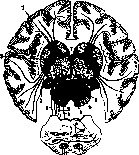
The corticopontine tracts include frontal, temporal, and occipito-pontine fiber systems. The frontopontine system (Arnold's bundle) originates in the frontal lobe; authors' opinions differ regarding the exact place of its origin: according to some data, it begins on the outer surface in the anterior parts of the frontal gyri, according to others—in the posterior parts, and finally, according to a third opinion, the fibers originate on the lower and inner surfaces of the frontal lobe. In the white matter of the frontal lobe, the frontopontine system occupies the outer sagittal layer; in the capsula interna, it passes through the lower parts of the anterior limb (see figure), in the cerebral peduncle it is located in the inner fifth of its base, and then terminates in the nuclei of the base of the pons.
The temporopontine system (Turck's bundle) originates in the middle parts of the second and third temporal gyri, passes through the lower parts of the corona radiata and the pars sublenticularis capsulae internae into the cerebral peduncle, where it occupies the outer fifth of the base; it terminates in the upper-posterior nuclei of the base of the pons. Some authors believe that the occipitopontine system, i.e., fibers from the occipital lobe (from which gyri is not exactly known), also runs within this system.
These systems are especially developed in humans in connection with the great development of the cerebral hemispheres. The corticopontine tracts connect the cerebral cortex through the pons with the opposite cerebellar hemisphere, which also indicates their functional significance—the possible participation of various parts of the cerebral cortex (visual, auditory, etc.) in the work of the cerebellum; this is most clear regarding the frontal lobes, where the higher cortical centers of equilibrium are located, which send their stimuli to the cerebellum, and in the case of its destruction, can take over its function.
Arrangement of the corticopontine and pyramidal tracts in the internal capsule, in the cerebral peduncle, and in the pons: 1—frontopontine tract; 2—pyramidal tract; 3—temporo-occipital tract of the pons.
Related articles
Cite this page
“Corticopontine Tracts.” Soviet Medical Encyclopedia. English translation of Bolshaya Meditsinskaya Entsiklopediya, 1st ed. (Moscow, 1928–1936), ed. N. A. Semashko. https://sovietmedicalencyclopedia.com/article/corticopontine-tracts/