Joseph Babinski
Historical document, translated for reference. It reflects medical knowledge of the 1920s–30s and is not medical advice.
Summary
Biography of Joseph Babinski, a prominent French neuropathologist and student of Charcot known for describing the Babinski reflex, cerebellar symptoms, and contributions to neurology and the study of hysteria.
Encyclopedia article (1928–1936)
BABINSKI, Joseph, born in 1856 in Poland, one of the outstanding contemporary neuropathologists, a student of Charcot. He graduated from the medical faculty in Paris, where his further scientific and pedagogical activity unfolded: „Médecin des hôpitaux de Paris“, honorary member of the Society of Neuropathologists and Psychiatrists in Paris, of which he was a founder (1899), as well as of the journal „Revue neurologique“, of which he served as editor; member of the Paris Academy of Sciences and the Biological Society in Paris. Babinski authored about 300 works; there is hardly any field in neuropathology in which he did not work. Babinski's works on the following subjects enjoy special fame: he described (1896) the reflex (see Babinski's reflex) which has enormous diagnostic significance; Babinski holds one of the prominent places in delineating the symptom complex in cerebellar diseases; the symptoms he described—adiadochokinesia, asynergia, catalepsy, hypermetria, mouvements démesurés—have become classical for determining the cerebellar localization of a disease. Many of Babinski's works are devoted to the study of defense reflexes, which he used to determine the localization of a tumor in the spinal cord (its lower boundary). In France, Babinski was one of the first (1911) to apply surgical
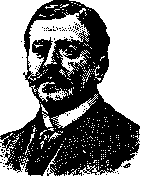
intervention for spinal cord tumors. Aside from the reflex, he described a number of symptoms allowing the differentiation of organic hemiplegia from functional hemiplegia. In the doctrine of hysteria (see), Babinski holds his own views: he believed that the symptoms observed in it both appear and disappear as a result of suggestion (autosuggestion and heterosuggestion). Babinski proposed replacing the word „hysteria“ with the word pythiatiism, as corresponding to one of the main symptoms. During the war, Babinski worked extensively in the field of studying reflex disorders (troubles d'ordre réflexe)—local forms of angiotrophoneuroses occurring after a mild injury that produces prolonged irritation and causes vascular spasm. Babinski enjoyed great popularity as a lecturer; the advanced training lectures he organized for physicians attracted a huge number of both French and foreign doctors.
Related articles
Cite this page
“Joseph Babinski.” Soviet Medical Encyclopedia. English translation of Bolshaya Meditsinskaya Entsiklopediya, 1st ed. (Moscow, 1928–1936), ed. N. A. Semashko. https://sovietmedicalencyclopedia.com/article/babinski/